
5 Best Home Light Bulbs for Baby Sleep and Nursery Lighting in 2026

Choosing the right bulb for a baby room is mostly about keeping light soft, warm, and easy on sleepy eyes. The best options reduce blue light, avoid harsh glare, and give you enough brightness for bedtime routines without feeling too stimulating. For a broader look at room lighting, see kids bedroom lighting ideas and cozier room bulb options.
This roundup focuses on bulbs that are designed for sleep-friendly evening use, from amber glow to red-light styles. If you want a quick refresher on color temperature and light quality, this LED buying guide is a helpful general reference.
Quick picks
- Best Overall: Nite-Nite Light Bulb. Natural Baby Sleep Aid. Promotes Healthy
- Best Adjustable: Wivety LED Sleep Amber Light Bulbs with Remote Control, 1600K E26
- Best Warm Glow: Neporal Amber Sleep Light Bulbs 1800K 4PK, 9W 60 Watt Equivalent
Jump to a product
- Nite-Nite Light Bulb. Natural Baby Sleep Aid. Promotes Best Overall
- Wivety LED Sleep Amber Light Bulbs with Remote Control Best Adjustable
- Neporal Amber Sleep Light Bulbs 1800K 4PK, 9W 60 Watt Best Warm Glow
- JandCase Sleep Light Bulb, Amber Light Bulbs,Sleep Top Pick
- Neporal 625nm Red Light Bulbs for Sleep, 100% Blue Light Top Pick
Quick Comparison
| # | Product | Best for | Lumens | Amazon |
|---|---|---|---|---|
| 1 |  Best Overall Nite-Nite Light Bulb. Natural Baby Sleep Aid. Promotes Healthy |
baby sleep routines and nursery lighting | 3 watts | Check on Amazon |
| 2 |  Best Adjustable Wivety LED Sleep Amber Light Bulbs with Remote Control, 1600K E26 |
nurseries needing dimmable amber light | 5W | Check on Amazon |
| 3 | 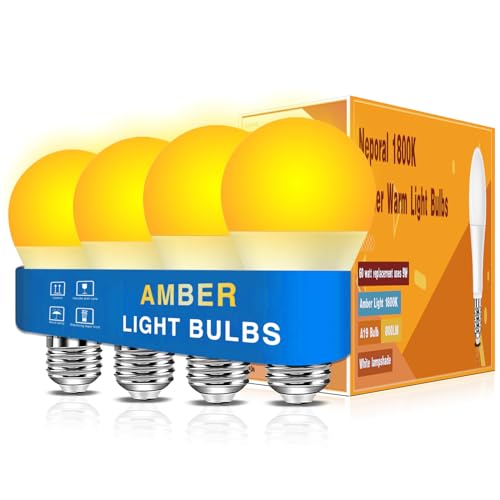 Best Warm Glow Neporal Amber Sleep Light Bulbs 1800K 4PK, 9W 60 Watt Equivalent |
soft amber lighting for babies | 800 lumens | Check on Amazon |
| 4 |  Top Pick JandCase Sleep Light Bulb, Amber Light Bulbs,Sleep Therapy,Blue Light |
melatonin-friendly nursery lighting | 750 lumens | Check on Amazon |
| 5 |  Top Pick Neporal 625nm Red Light Bulbs for Sleep, 100% Blue Light Blocking |
red light sleep lighting for babies | 800 lumens | Check on Amazon |
How We Chose
We looked for bulbs that are clearly positioned for baby sleep, nursery use, or low-stimulation evening lighting, with attention to blue-light blocking, color temperature, socket type, and brightness. Since this type of bulb is often chosen for calm nighttime routines, we compared how each product balances gentle light output with practical details like dimming, pack size, and compatibility.
1. Nite-Nite Light Bulb. Natural Baby Sleep Aid. Promotes Healthy
Best for: baby sleep routines and nursery lighting
This amber candelabra bulb is built for sleep-friendly nursery and bedroom lighting, with a very warm glow and a standard E12 socket. It is rated at 3 watts and described as equivalent to a 60-watt incandescent bulb, while also emphasizing shatterproof construction and low blue light.
It combines baby-focused sleep support with a compact bulb shape and simple, low-power design.
Key features
- 99.9% blue-spectrum light free
- E12 candelabra socket
- 3 watts, 60W equivalent
- Shatterproof PC cover
- No flicker or glare
Pros and Cons
Pros
- Very low blue light output
- Standard E12 socket fits many fixtures
- Shatterproof PC cover adds durability
- Uses only 3 watts of power
Cons
- Single-bulb pack
- Candelabra size may not suit every fixture
2. Wivety LED Sleep Amber Light Bulbs with Remote Control, 1600K E26
Best for: nurseries needing dimmable amber light
This amber A15 bulb comes in a 4-pack and includes a remote for brightness control and preset sleep modes. It is designed to filter out 99.96% of blue light and can dim down to 0.1% brightness, making it a strong option for gentle nursery lighting.
Its remote control and deep dimming range make it especially flexible for bedtime routines.
Key features
- 1600K amber light
- 99.96% blue light filtering
- Remote control included
- Dims to 0.1% brightness
- Six preset sleep modes
Pros and Cons
Pros
- Very warm 1600K color temperature
- Remote makes brightness changes easy
- Can dim extremely low
- Six preset sleep modes for bedtime routines
Cons
- Not compatible with dimmer switches
- Remote adds another thing to keep track of
3. Neporal Amber Sleep Light Bulbs 1800K 4PK, 9W 60 Watt Equivalent
Best for: soft amber lighting for babies
This 4-pack of amber A19 bulbs is built around soft 1800K lighting and 99.94% blue-light blocking. It also lists 800 lumens, CRI over 80, and standard E26/E27 compatibility, which makes it a practical choice for bedside lamps and nursery spaces.
It offers a balanced mix of soft light, useful brightness, and everyday lamp compatibility.
Key features
- 1800K warm orange glow
- 99.94% blue light blocking
- 800 lumens soft light
- CRI over 80
- E26/E27 standard socket
Pros and Cons
Pros
- Warm 1800K color feels gentle at night
- 800 lumens gives usable light for reading
- Standard E26/E27 fit works with many lamps
- 4-pack covers multiple rooms or fixtures
Cons
- Not dimmer-specific in the listed features
- May be brighter than a pure night-light bulb
4. JandCase Sleep Light Bulb, Amber Light Bulbs,Sleep Therapy,Blue Light
Best for: melatonin-friendly nursery lighting
This amber A19 bulb is aimed at sleep support, with 99.9% blue-spectrum light reduction and a 1900K color temperature. It also lists 750 lumens, no glare, no flicker, and standard E26 socket use for bedrooms, nurseries, and ambient lighting.
It is a straightforward warm-light option with a comfortable brightness level and simple lamp compatibility.
Key features
- 99.9% blue light free
- 1900K warm light
- 750 lumens soft output
- No glare or flicker
- Standard E26 socket
Pros and Cons
Pros
- Warm 1900K tone is easy on the eyes
- 750 lumens suits bedside and ambient use
- No glare or flicker listed
- Works with standard E26 fixtures
Cons
- No pack count listed in features
- No remote or dimmer features listed
5. Neporal 625nm Red Light Bulbs for Sleep, 100% Blue Light Blocking
Best for: red light sleep lighting for babies
This red A19 bulb uses 625nm red-light technology and claims 100% blue-light blocking. With 9 watts and 800 lumens, it is designed for sleep-friendly evening use in bedrooms, nurseries, and other low-stimulation spaces.
Its red-light design is the most specialized option here for very low-stimulation nighttime lighting.
Key features
- 625nm red light
- 100% blue light blocking
- 9 watts power use
- 800 lumens output
- Standard A19 E26/E27 fit
Pros and Cons
Pros
- Completely blocks blue and green light
- Red sunset-like tone is built for sleep
- 800 lumens provides strong usable light
- Standard A19 E26/E27 format
Cons
- Red light is more specialized than amber light
- May feel too intense for users wanting a softer glow
Which One Should You Choose?
- baby sleep routines and nursery lighting: Nite-Nite Light Bulb. Natural Baby Sleep Aid. Promotes Healthy
- nurseries needing dimmable amber light: Wivety LED Sleep Amber Light Bulbs with Remote Control, 1600K E26
- soft amber lighting for babies: Neporal Amber Sleep Light Bulbs 1800K 4PK, 9W 60 Watt Equivalent
- melatonin-friendly nursery lighting: JandCase Sleep Light Bulb, Amber Light Bulbs,Sleep Therapy,Blue Light
- red light sleep lighting for babies: Neporal 625nm Red Light Bulbs for Sleep, 100% Blue Light Blocking
Buying Guide: What to Look For
Choose the light color first
For baby rooms, many shoppers start with amber or red tones because they are less stimulating in the evening. Lower color temperatures usually look warmer and calmer, which can help bedtime feel more settled. If you want a quick comparison of room lighting styles, cozier room bulb options is a useful companion guide.
Check blue-light blocking claims
Many sleep-focused bulbs highlight how much blue light they filter out, and that matters because blue light can feel more alerting at night. Look for a clear percentage or a very warm color temperature, then match that to how dark or bright you want the room to feel. For a general explanation of bulb quality terms, Consumer Reports on LED bulbs is a good reference.
Match the socket and bulb shape
A bulb only works well if it fits the fixture you already have. E26 and E27 are common standard bases, while E12 candelabra bulbs are smaller and better for certain lamps or decorative fixtures. A shape like A19 or A15 can also affect how the bulb sits in the lamp shade.
Think about brightness and dimming
Brightness is usually measured in lumens, and the right level depends on whether you want a soft night light or a bulb that can also handle reading and diaper changes. Dimming can be very helpful in a nursery, but not every bulb works with a wall dimmer, so check whether it uses a remote, built-in levels, or a standard dimmer switch.
Look for comfort features
For baby spaces, flicker-free light, no glare, and smooth dimming can make the room feel calmer. If you plan to use the bulb in a shared bedroom or living area, a more flexible option may be better than a very specialized sleep bulb. Pack size also matters if you want to outfit more than one lamp at once.
Frequently Asked Questions
What kind of bulb is best for a baby room at night?
A very warm amber or red bulb is often a good fit for nighttime use because it keeps the room calm and reduces blue light. The best choice depends on whether you want a soft night-light feel or enough light for feeding and changing.
What does color temperature mean?
Color temperature describes how warm or cool the light looks, usually measured in kelvin. Lower numbers look warmer and more yellow or amber, while higher numbers look cooler and whiter.
Why do people want blue-light blocking bulbs for nurseries?
Blue-light blocking bulbs are popular for evening routines because they create a gentler-looking light. Many shoppers prefer them when they want the room to feel more relaxed before sleep.
Do I need a dimmable bulb for a nursery?
Not always, but dimming can be helpful if you want more control over bedtime lighting. If you already use a wall dimmer, make sure the bulb is compatible, since some bulbs only dim with a remote or preset modes.
What bulb base should I check before buying?
Check the fixture socket type first, such as E26, E27, or E12. The bulb can have the right lighting style, but it still needs to physically fit your lamp or ceiling fixture.
How bright should a baby sleep bulb be?
That depends on the job you want it to do. Softer bulbs are better for winding down, while brighter ones can help with reading or nighttime care without needing another lamp.
Final Thoughts
For a baby room, the safest starting point is usually the most sleep-friendly, low-blue-light option that still fits your fixture and gives you the brightness you need. If you want the most balanced pick overall, the top-rated choice here is the best place to begin.
As an Amazon Associate, we earn from qualifying purchases.