
Can Light Curtains Make a Room Look Bigger? A Practical Guide for Small Spaces

Yes — light curtains can make a room look bigger, but only when they work with the rest of the window setup.
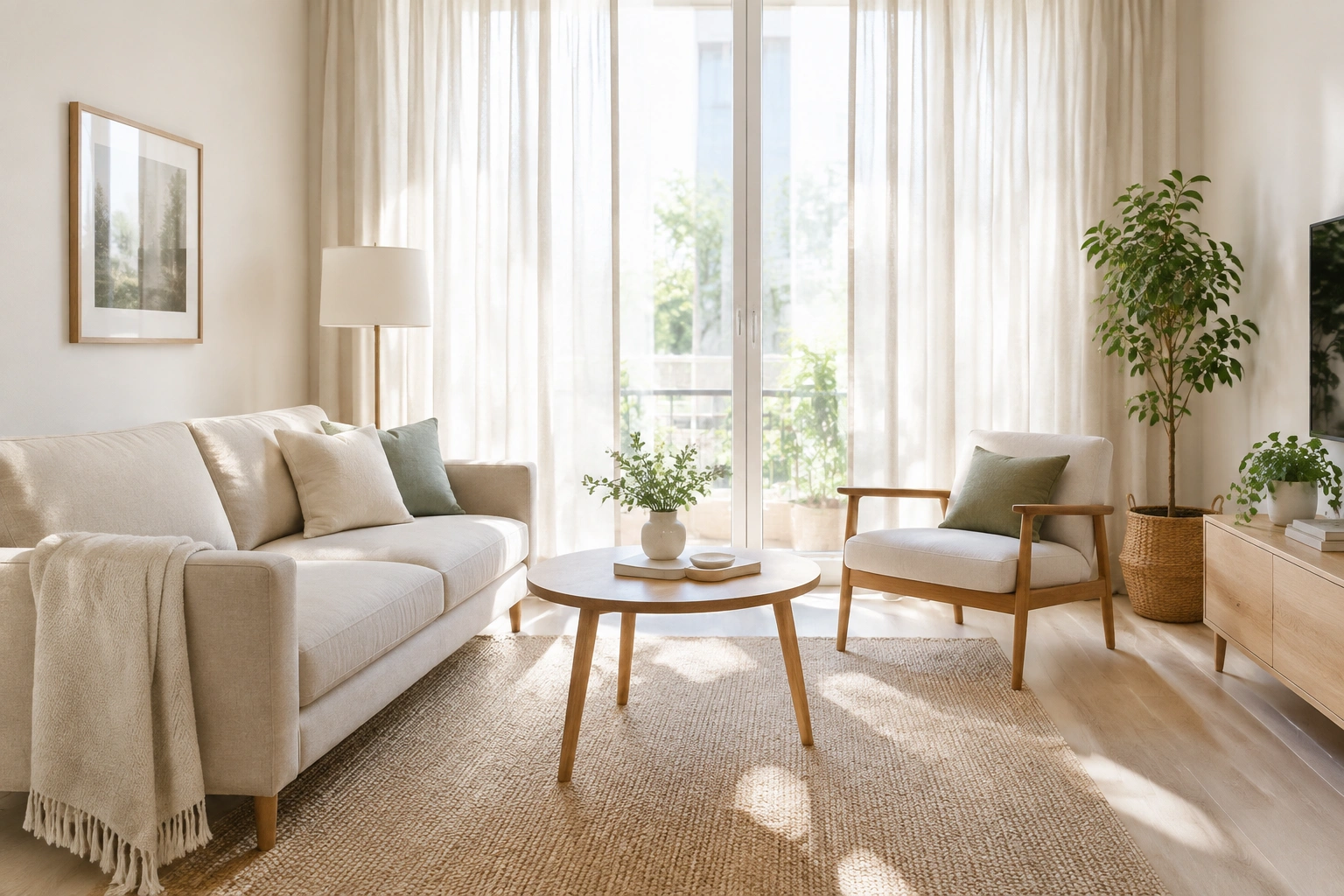
The main effect comes from the curtain’s color, fabric weight, and placement. In general design terms, lighter colors can help a room feel less visually heavy, while sheer and semi-sheer fabrics can keep more daylight moving through the space. When curtains are hung high and wide, they can also help the window area feel more expansive.
That said, light curtains are not magic. A short panel hung at the window frame can still make a room feel chopped up. A pale curtain made from a thick, dense fabric can still look bulky. If your goal is a room that feels more open, the details matter as much as the color.
Why light curtains create a bigger-looking room
Small rooms usually feel cramped for one of two reasons: too much visual weight or too little daylight. Light curtains help with both.
A dark curtain can create stronger contrast against walls and windows. That contrast can be beautiful in the right room, but in a compact space it often makes the window area feel heavier. Light curtains soften that edge. They blend more gently into the room, which keeps your eye moving instead of stopping at a dark block of fabric.
There’s also a simple brightness effect. When sunlight passes through lighter fabric, the room can feel less closed in. Even if the actual square footage does not change, the room may read as brighter and less crowded.
Here’s the practical takeaway: if a room already feels tight, aim for curtains that reduce contrast rather than add it. That usually means soft white, ivory, cream, pale gray, or a very light pastel.
Choose the right curtain color, fabric, and opacity
Color matters, but fabric and opacity matter almost as much. A curtain can be light in color and still feel heavy if the weave is dense or the lining is thick.
Light curtain comparison for small rooms
| Curtain choice | Brightness | Privacy | Space-enhancing effect | Best use |
|---|---|---|---|---|
| Sheer light curtains | High | Low | Strongest airy effect | Rooms where daylight matters most |
| Semi-sheer light curtains | Medium-high | Medium | Balanced and flexible | Living rooms, apartments, shared spaces |
| Opaque light curtains | Medium | High | Good, but less open-looking | Bedrooms, street-facing windows |
| Dark curtains | Low to medium | Medium to high | Can feel heavier unless the room supports them | Rooms with strong contrast or dramatic style |
Sheer curtains
Sheer curtains are the easiest way to make a room feel lighter. They soften the window without blocking much daylight, which is why they work so well in rooms that already feel dim.
They are a strong fit for a north-facing living room that needs every bit of daylight, a small home office where glare is not a major issue, or a bright studio apartment where privacy is less of a concern during the day.
The trade-off is privacy. If your window faces a neighbor, street, or walkway, sheer panels alone may not be enough. They work best when privacy is not the main concern or when you can layer them over another treatment.
Semi-sheer curtains
Semi-sheer curtains are the middle ground. They still let in a good amount of light, but they give you a little more privacy and a slightly more finished look than a very sheer panel.
They are often a smart choice for a living room, studio apartment, or guest room because they keep the space feeling open without leaving it too exposed. If the room gets moderate daylight and you want a softer look than blinds alone, semi-sheer panels are usually the most flexible option.
Opaque light curtains
Opaque curtains in a light color can still help a small room feel bigger, especially if the color is soft and the fabric hangs cleanly. They are useful when privacy matters more than maximum brightness.
They tend to work best in bedrooms, nurseries, or first-floor rooms where coverage matters. If the room is already bright enough, a light opaque panel can give you privacy without making the space feel overly closed in.
The downside is that opaque fabric blocks more light, so the room may not feel as open as it would with sheer or semi-sheer panels. If the room is already dark, this choice can work against your goal unless the windows are large.
What colors work best
The safest small-room palette is usually white, cream, soft gray, warm beige, or a muted pastel. These colors help the window area feel less visually heavy.
A very bright white can look crisp and clean, but in some rooms it can feel stark if the walls are warm or the light is cool. If that happens, soften the look with ivory or a gentle greige instead of forcing a pure white.
How to hang curtains to make ceilings look taller
If you want your room to feel bigger, placement may matter more than the curtain color itself.
Mount the rod 4 to 6 inches above the window frame when ceiling height allows. If you have the wall space, go higher still, ideally closer to the ceiling line. That extra vertical distance draws the eye upward and can make the room feel taller.
Width matters too. Extend the rod beyond both sides of the window so the curtains can open without covering the glass. This makes the window look wider and allows more daylight into the room. If the panels stay stacked over the glass, you lose the airy effect you were trying to create.
A simple decision rule
- If your main problem is a low ceiling, hang the rod higher.
- If your main problem is a narrow window, extend the rod wider.
- If your main problem is both, do both and keep the panels light.
Best curtain length for a bigger-looking room
For a small room, curtains should usually kiss the floor or hover just above it by about half an inch. That clean line looks intentional and helps the wall feel taller.
Puddling is generally not the best choice for a small room. It can look elegant in some larger or more formal spaces, but in a compact room it often adds visual bulk and can make the floor area feel busier.
Floor-length curtains that barely touch the floor are the safest option if your goal is to make the room feel bigger. They create one uninterrupted vertical line without looking fussy.
Short curtains can work in a few situations — for example, above a radiator or under a deep windowsill — but they rarely give the same open effect. If your goal is to make the room feel larger, short panels are usually the first thing I would skip.
The trade-off
Curtains that just reach the floor look best for scale, but they need more precise measuring. If the panels hover awkwardly several inches above the floor, the room can look unfinished. If you are choosing between “slightly too long” and “a little too short,” the longer option usually wins, as long as the fabric can hang cleanly.
Step-by-step: use light curtains to make a small room feel larger
Here is the process I’d use in a real small room.
1. Decide what you need most
Pick your main goal before you shop:
- More brightness
- Taller-looking ceilings
- A wider-looking window
- Better privacy
This matters because the best curtain choice changes depending on the goal. A sheer panel is great for brightness. A longer, wider setup is better for height and width. A light opaque curtain is better when privacy comes first.
2. Measure the window and wall space
Measure the window width, then look at how much wall space you have above and beside it. If the window is small, you will usually get a better result by visually enlarging the window area with rod placement rather than trying to compensate with a bold curtain style.
3. Choose the lightest fabric that still fits your privacy needs
If the room is private and needs daylight, sheer or semi-sheer is usually the best place to start. For a dark north-facing bedroom, a semi-sheer layered with a blackout lining or a second panel can balance brightness and privacy. For a sunlit studio apartment, semi-sheer panels often give enough openness without making the space feel exposed. If the room faces outside traffic or nearby neighbors, go with a light opaque panel or use a layered setup.
4. Mount the rod higher than the frame
This is the step that changes the room’s proportions. Keep the rod above the window rather than directly on the trim. If the ceiling is especially low, push the rod higher to stretch the wall visually.
5. Extend the rod beyond the window
A rod that reaches past the frame makes the window appear larger when the curtains are open. It also lets more light in, which supports the bigger-room effect.
6. Choose a floor-length hem
Let the curtains fall to the floor if possible. That vertical line helps the wall feel longer and more elegant, even in a simple room.
7. Keep the styling simple
In a small room, avoid extra visual clutter around the window. Skip overly busy tiebacks, bulky valances, and heavy layered treatments unless you truly need them for function.
Room-by-room recommendations
Bedrooms
Bedrooms usually need more privacy, so light opaque curtains or semi-sheer curtains with a second layer are often the best fit. If the room is small and dark, choose the lightest fabric that still gives you enough coverage at night.
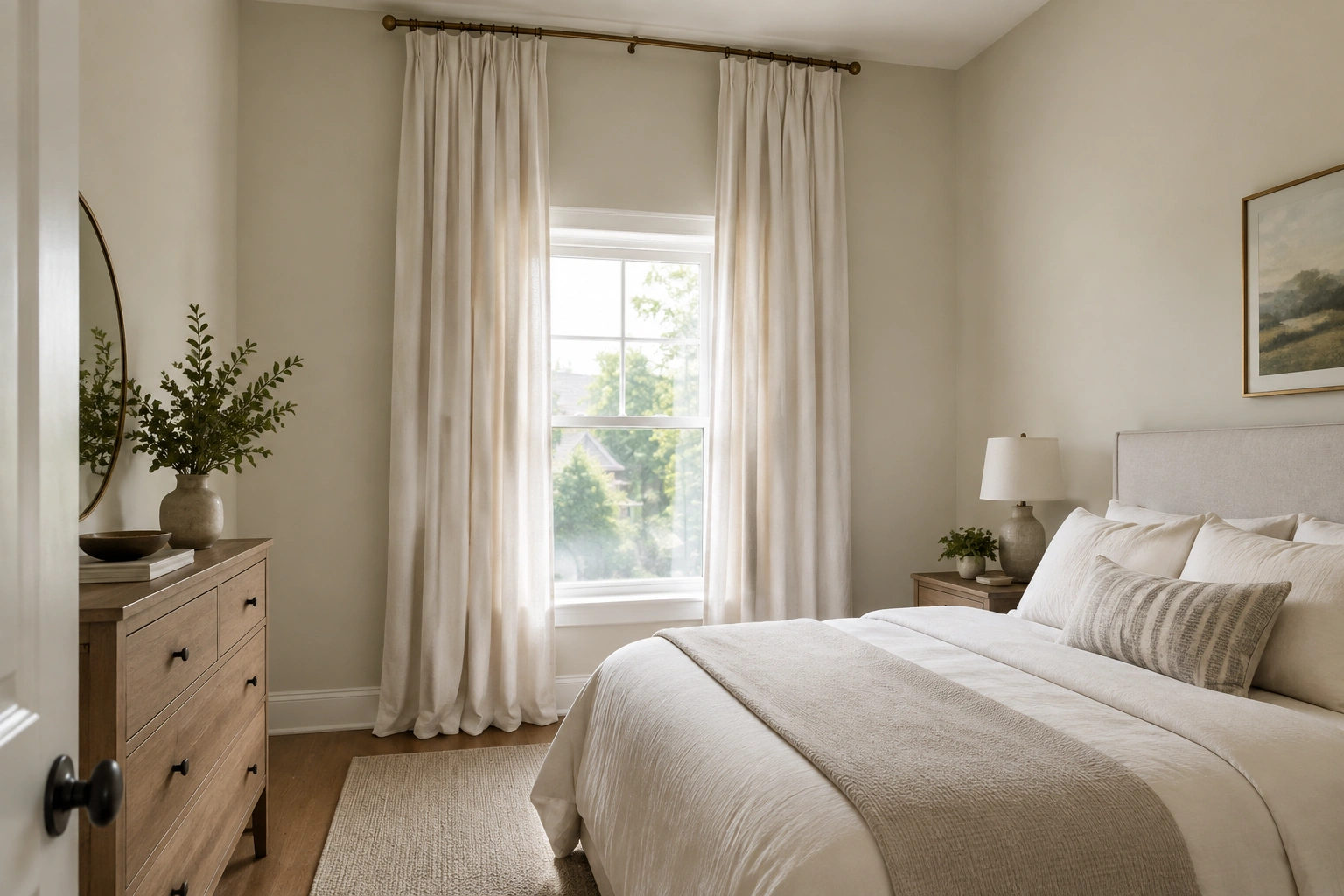
If the bedroom window is narrow, hang the rod wider than the frame so the window looks larger during the day. That helps the room feel less boxed in.
Living rooms
Living rooms benefit from brightness more than almost any other room. Light sheer or semi-sheer curtains can make the whole space feel calmer and more open, especially if the room only gets one main window.
If your living room already has a lot of furniture, avoid a curtain style that adds more visual density. Clean, simple panels usually work better than anything decorative or bulky.
If you’re also planning the furniture layout, my guide on how to make a small living room feel balanced can help you keep the whole room from feeling crowded.
Apartments and rentals
Renters often need a solution that looks good without permanent changes. That usually means a tension rod, no-drill hardware, or a simple mounted rod using existing holes or approved anchors.
For lightweight sheer or semi-sheer panels, a tension rod can work well in smaller windows. For heavier opaque curtains, choose no-drill hardware rated for the panel weight or use existing mounting points instead of relying on a basic tension setup.
In a rental, semi-sheer panels are often the sweet spot. They make the room feel brighter without looking flimsy, and they are flexible enough to move with you.
For tricky layouts, this can pair well with a layout strategy from can furniture be placed against every wall in a small room? so the window treatment and furniture plan work together instead of competing.
Common mistakes that make small rooms feel even smaller
A few curtain choices can undo the whole effect.
Heavy fabric
Thick, dense fabric adds visual weight. Even in a light color, it can make the window area feel bulky and reduce the airy look you want.
Low mounting
A rod hung right at the frame keeps the eye low. That makes the ceiling feel shorter and the wall feel less generous.
Short panels
Curtains that stop well above the floor often look accidental in a small room. They can make the wall feel clipped instead of tall.
Busy patterns
Large prints, strong contrast, and crowded patterns can make a small room feel visually busier. If you want some texture, choose something subtle rather than a loud graphic.
Too much layering
Layering can be useful, but too many layers can make the window feel heavy. If your room is already dark or compact, keep the layers minimal.
Troubleshooting: what to do if the room still feels small or dark
If the curtains are light but the room still feels closed in, check the problem from the window outward.
If the room is still dark
The fabric may be too opaque, or the curtains may be covering too much of the glass. Try a lighter weave, pull the rod wider, or switch to a sheerer panel if privacy allows.
If the ceiling still feels low
The rod is probably too close to the frame. Raising it even a little can help the room feel taller.
If the window still looks small
The rod may not extend far enough beyond the frame. Wider placement helps the window read as larger, especially when the curtains are open.
If the room feels bright but busy
The curtains may be light, but the pattern or texture may still be too active for the space. In that case, simplify to a solid panel in a soft neutral.
Rent-friendly curtain solutions without permanent changes
Renters can still get the same visual benefits without major installation.
A tension rod works well for lightweight panels in smaller windows. It is best when you need a simple, temporary fix and the curtain fabric is not too heavy.
No-drill curtain hardware is another option if you want a more finished look but cannot make permanent changes. Just make sure the mounting system is secure enough for the panel weight you choose.
If you can’t change the rod height much, make up for it with two things: a lighter fabric and a floor-length panel. That won’t solve every spacing issue, but it can still soften the room and keep it from feeling boxed in.
When light curtains are not the best choice
Light curtains are not always the smartest answer.
If privacy is your top concern, especially in a bedroom or street-facing room, a sheer curtain alone may not be enough. In that case, choose a light opaque panel or layer sheers with a more substantial curtain.
If the room gets very strong sun and you need to reduce glare or protect furnishings, a darker or lined treatment may be more practical. The room might lose some of the airy effect, but the function may be worth it.
And if the room already has pale walls, lots of daylight, and a very minimal layout, dark curtains can sometimes work better than people expect. The old rule that dark curtains always make a room smaller is too simple. In the right room, they can add contrast and definition without overwhelming the space.
The real goal is not “light curtains at all costs.” It is choosing the window treatment that supports the room’s proportions, light level, and privacy needs.
Quick answer to the real question
So, can light curtains make a room look bigger?
Yes — especially when they are light in color, made from an airy fabric, hung high, and allowed to fall to the floor. That combination helps the room feel brighter, taller, and less crowded.
If you only remember one thing, remember this: the curtain color matters, but the hanging height and length often matter just as much.
FAQ
Do light curtains always make a room look bigger?
Not always. They usually help a room feel brighter and more open, but the effect depends on fabric weight, curtain length, and rod placement.
Are sheer curtains better than opaque curtains for small rooms?
Sheer curtains usually create the airiest look because they let in more daylight. Opaque light curtains are better when privacy matters more.
Should curtain rods be hung above the window frame?
Yes, if your goal is to make the room feel taller. Hanging the rod higher draws the eye upward and helps the wall look longer.
Do short curtains make a room look smaller?
They often do, because they stop the eye early and can make the wall feel cut off. Floor-length curtains usually look better in small spaces.
Can patterned curtains work in a small room?
Yes, but keep the pattern subtle. Large, busy patterns can add visual clutter and make the room feel tighter.