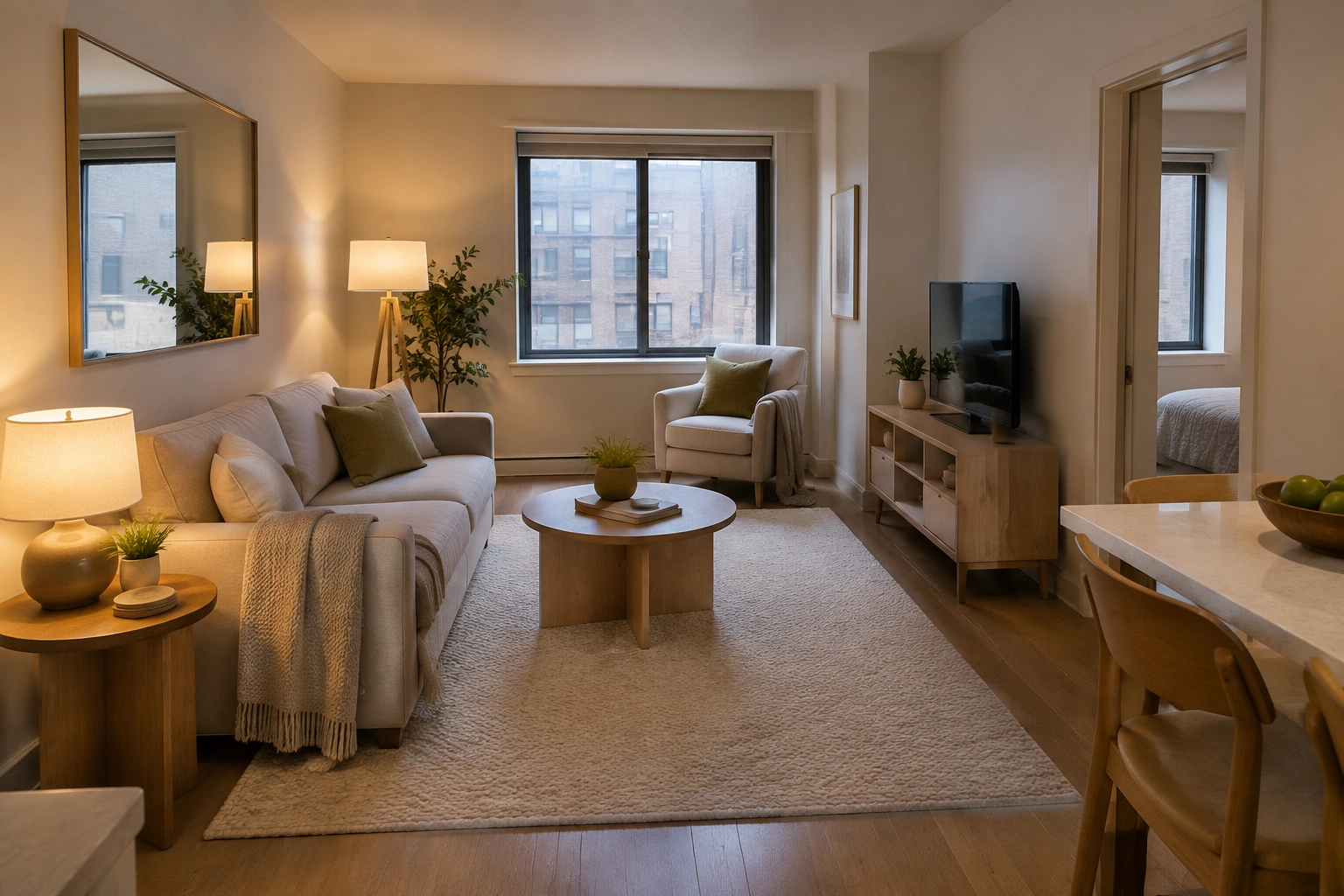
How to Brighten a Small Living Room With Little Sunlight

A small living room with almost no daylight can feel gloomy fast, especially when the furniture is dark, the curtains are heavy, or the only light source is one weak ceiling fixture. The good news: you can usually make the room feel brighter and more open without remodeling.
The biggest wins come from a few things: clearing visual clutter, using lighter finishes, keeping as much window light as possible, layering lamps instead of relying on one overhead light, and placing mirrors where they bounce light instead of dead space. If you want the fastest result, focus there first.
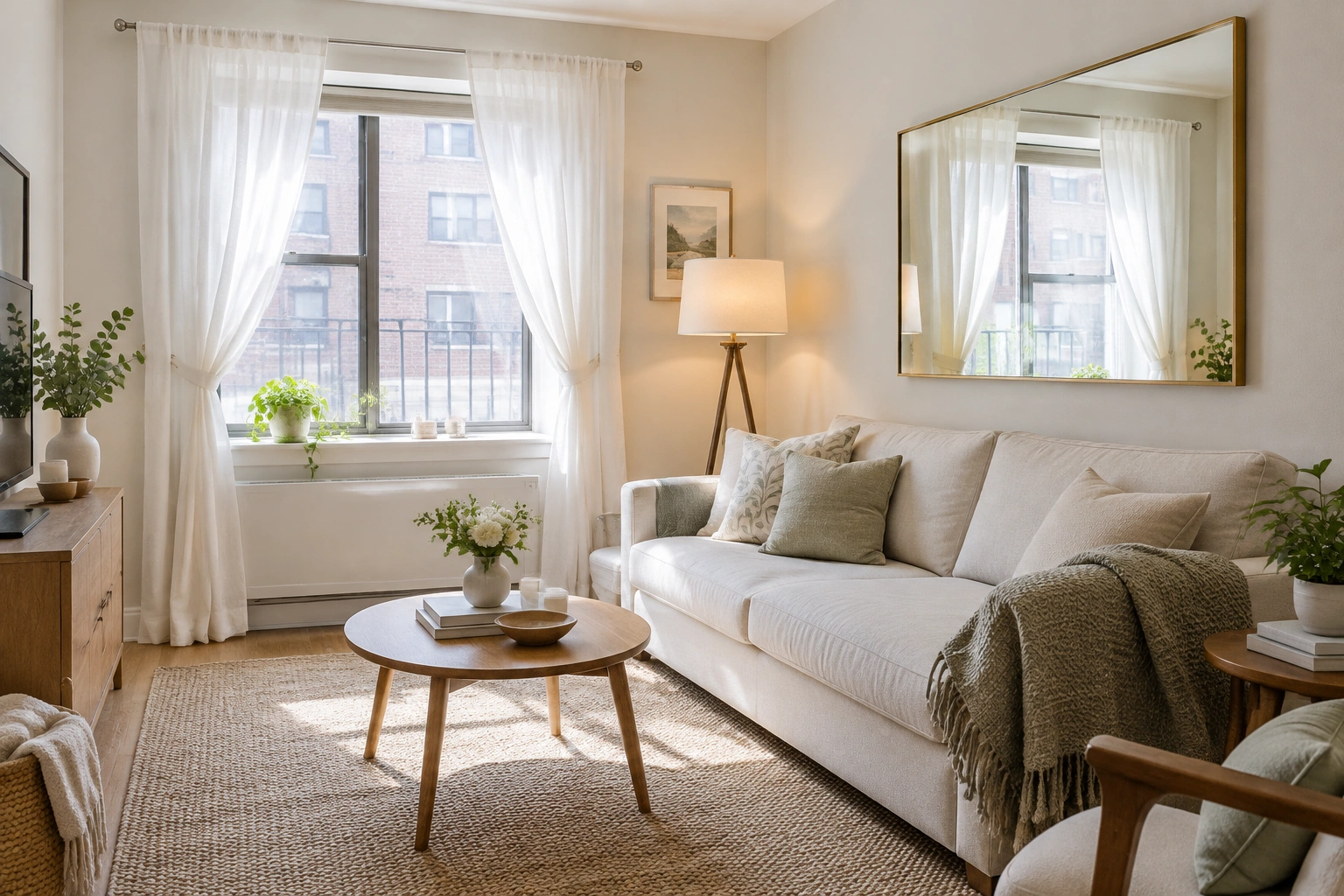
Quick Answer: The Fastest Ways to Brighten a Small Dark Living Room
If you only have an afternoon, do these first:
- Replace heavy curtains with sheer panels or pull them fully open during the day.
- Add at least two light sources besides the ceiling fixture.
- Swap in LED bulbs with enough brightness for the room, not decorative bulbs that only look pretty.
- Remove one or two bulky, dark pieces that block light paths.
- Add a mirror opposite or near a window so it reflects daylight deeper into the room.
- Use lighter textiles, like a pale rug or throw, to reduce visual heaviness.
Painting can help too, but lighting and layout often create the most noticeable difference in the shortest time.
What You Need Before You Start
You do not need a full redesign. A simple brightness refresh usually calls for:
- A tape measure
- LED bulbs
- One or two lamps, depending on the room
- Sheer curtains or lighter window panels
- A mirror or two
- Painter’s tape and a sample pot if you plan to test wall color
- A lighter rug or throw blanket, if the room has a lot of dark fabric
- A box or basket for items you can remove
If you are on a budget, think in layers. The cheapest changes are usually decluttering, moving furniture, and changing bulbs. Paint and new window treatments come next. New furniture should be the last step unless the current pieces are so large or dark that they dominate the room.
Step 1: Clear Visual Clutter and Remove Light-Blocking Pieces
A small room feels darker when the eye has too many heavy objects to process. That includes oversized furniture, stacked decor, dark accessories, and anything sitting in front of a window.
Walk the room and ask one question: what is blocking light or making the room feel visually dense?
Look for:
- Tall furniture in front of windows
- Dark ottomans, side tables, or storage cubes that absorb light
- Too many small decor items grouped together
- Thick throws, heavy pillows, and dark artwork
- Bulky bookcases that take up a lot of visual space
In a tiny living room, even one oversized chair can have a big effect. If a piece is both large and dark, it tends to anchor the room visually in a way that makes everything else feel heavier. Swapping that one item for something lighter and more open underneath, like a chair with visible legs, can change the whole feel.
A good rule: keep the window zone as open as possible. If you need storage near the window, choose the lowest-profile option you can live with.
Step 2: Choose Brighter Colors and More Reflective Finishes
Light colors reflect more light than dark colors, so they usually help a dim room feel brighter. For the best results in a small living room with very little daylight, choose from the lightest, softest color families first: warm white, creamy off-white, pale greige, light beige, or a muted soft taupe. Those shades usually brighten the room without making it feel stark.
If you are painting, think about three surfaces:
- Walls: a soft light color helps the room feel less enclosed
- Ceiling: keeping it light can make the room feel taller
- Trim: lighter trim can sharpen the edges of the room and keep it from feeling muddy
Paint finish matters too. Here is the practical trade-off:
| Finish | Best for | Trade-off |
|---|---|---|
| Matte | Hides wall flaws well | Absorbs more light, so it can feel flatter in a dark room |
| Eggshell | Balanced choice for living rooms | Slightly less reflective than satin |
| Satin | Reflects more light and wipes clean easily | Can show wall imperfections more than matte |
For a room with almost no daylight, eggshell is often the safest choice if you want a soft look with a little lift. If the walls are in decent shape and brightness is the top priority, satin is the better pick because it reflects more light. Matte is usually the least helpful if your main goal is brightness.
The same idea applies to rugs, pillows, and curtains. A light rug does not magically create daylight, but it can reduce the room’s visual weight. If the sofa is dark, even one lighter textile can stop the whole room from feeling bottom-heavy.
Renter-friendly color and texture swaps
If you cannot paint, use the same principle with decor:
- Choose a pale rug in a low-contrast pattern or a solid light neutral
- Pick textured but light-colored throws and pillow covers
- Avoid very dark, high-shine fabrics that absorb or visually crowd the space
A lighter rug with a bit of texture usually works better than a plain flat dark one, because it softens the room without making the floor feel heavy.
Step 3: Maximize Daylight With the Right Window Treatments
If the room has little sunlight, do not waste the daylight it does get.
Here is the simplest decision framework:
- Need privacy all day? Use sheer curtains or a layered treatment.
- Need maximum daylight? Keep the window as open as possible during the day.
- Need light control at night but daylight by day? Use a double setup: sheers for daytime, a lighter blind or shade for privacy after dark.
Sheer curtains vs. blinds vs. no covering
| Option | Brightness | Privacy | Best use case |
|---|---|---|---|
| Sheer curtains | High | Low to medium | Rooms that need softness and daylight |
| Blinds | Medium | High | Rooms where privacy matters more |
| No covering | Highest | None | Upper-floor or very private spaces |
If your room faces a street or neighboring building, sheer curtains are often the best compromise. They soften the window without blocking much daylight. If you can go without a covering during the day, that gives you the most light, but it is not realistic for every home.
A common mistake is keeping blackout curtains in place all day because they look finished. In a room with little natural light, that can make the room feel closed off even when the curtains are open if the fabric is too heavy or the stack is too bulky.
Step 4: Add Layered Lighting Instead of Relying on One Fixture
One overhead light rarely makes a small dark living room feel inviting. It tends to create one bright spot and leave the corners gloomy. Layered lighting spreads brightness more evenly.
Use three types of light:
- Ambient lighting for overall brightness
- Task lighting for reading or working
- Accent lighting to lift dark corners or highlight a focal point
A simple setup might look like this:
- One ceiling fixture or flush mount for general light
- One floor lamp beside the sofa
- One table lamp on a side table or console
That gives the room more even coverage than a single central light. If you only have space for one additional fixture, choose the one that helps the darkest seating area first.
Floor lamps vs. table lamps vs. ceiling lights
| Light type | Strength | Trade-off |
|---|---|---|
| Floor lamp | Great for corners and sofas; no table needed | Takes floor space |
| Table lamp | Easy to place and move | Needs a surface |
| Ceiling light | Covers the whole room | Often too harsh or too weak on its own |
If your living room has almost no daylight, think in terms of multiple smaller sources rather than one bright blast. The goal is not just more light. It is more even light.
Step 5: Pick the Best LED Bulbs for a Low-Light Living Room
Bulbs matter more than many people expect. A bulb can be energy-efficient and still feel too dim for a dark living room.
When shopping, check two things:
- Lumens = brightness
- Color temperature = how warm or cool the light looks
Best lumen ranges for a small dark living room
A practical starting point is:
- About 800 to 1,100 lumens per lamp for a typical table or floor lamp
- About 1,500 to 3,000 lumens total for a small dark living room, depending on room size, wall color, and how many fixtures you use
If the room is very dim, start closer to the higher end. If you already have some daylight or light-colored walls, you may not need as much.
Simple buying rule for how many bulbs or lamps to use
For a small dark living room, a good rule is two to three lamps or bulbs in addition to the main ceiling light. If the room is especially dark or has one weak overhead fixture, aim for three total light sources so brightness is spread around the room instead of pooling in one spot.
A simple setup is:
- 1 ceiling light
- 1 floor lamp
- 1 table lamp
If the room is long or L-shaped, add a third lamp only if one end still feels shadowy.
Warm white vs. cool white
| Bulb type | Look | Best for | Trade-off |
|---|---|---|---|
| Warm white | Cozy, softer | Relaxing spaces | Can look yellow in a dark room |
| Cool white | Cleaner, brighter | Rooms that need a crisp feel | Can feel a little stark if overused |
For a dim living room, a neutral-to-cooler LED often reads brighter and cleaner than a very warm bulb. That does not mean you need icy blue light. It just means overly yellow bulbs can make a dark room feel even more muted.
If you want a comfortable feel, mix the brightness carefully rather than going extremely warm. A room with little natural light usually benefits from bulbs that look clean enough to lift the shadows.
Also check that the bulb matches the fixture’s safety rating and wattage guidance. If a lamp or fixture has a maximum wattage listed, stay within it.
Step 6: Use Mirrors and Reflective Decor Strategically
Yes, mirrors can help, but only if they reflect something useful.
A mirror placed across from a window or near a lamp can bounce light deeper into the room. A mirror that faces a blank wall just reflects the blank wall, which does almost nothing for brightness.
Best mirror placement rules
- Place mirrors where they can catch daylight from a window
- Angle them to reflect a lamp if the room has very little sunlight
- Use one large mirror rather than several tiny ones if the goal is brightness
- Keep mirrors visually simple so they do not compete with the room
Reflective decor can help too, but it is usually less powerful than a well-placed mirror. Glossy trays, glass tabletops, and metal accents can bounce a little light around. Still, mirrors usually have a much bigger impact on brightness than small glossy accessories.
If you already have a dark room, do not overdo reflective surfaces. Too many shiny objects can create glare or visual clutter. One or two strong reflective pieces usually do more than a room full of small glossy accessories.
Step 7: Rearrange Furniture to Make the Room Feel Bigger and Brighter
Furniture layout can either support light or swallow it.
The easiest rule is to keep sightlines open. If you can see more floor, more window, and more wall, the room usually feels less cramped. That does not mean pushing everything against the walls. It means choosing pieces that do not interrupt the room’s flow.
Here is what helps most:
- Choose furniture with visible legs
- Keep the tallest pieces away from the window
- Use a smaller coffee table or one with a lighter visual profile
- Leave a little breathing room around the main seating area
- Avoid building a wall of furniture across the middle of the room
A glass or light wood coffee table often feels less heavy than a dark solid one. A sofa with raised legs usually looks lighter than a boxy sofa that sits flat to the floor.
If the room is extremely small, remove one piece before you add anything new. In many living rooms, that one decision creates more brightness than buying another decor item.
For more layout help, I also like pairing this advice with a solid furniture plan, like the approach in my guide to arranging furniture in a small living room.
Step 8: Use Temporary Fixes If You Rent
If you cannot drill holes or make permanent changes, focus on reversible upgrades that still improve brightness:
- Use peel-and-stick mirror panels or adhesive mirror tiles
- Try a tension rod for sheer curtains if you cannot mount hardware
- Use clip rings with lightweight curtains for easier swapping
- Add plug-in lamps instead of hardwired lighting
- Choose removable wall hooks for lightweight decor only
- Keep furniture and decor changes temporary and easy to undo
These options are especially helpful if you want more light without losing your deposit or changing the room permanently.
Practical Examples for Common Small, Dim Living Rooms
1) The north-facing apartment living room
A north-facing room often gets cooler, weaker light. In that case, sheer curtains, warm-neutral walls, and two or three lamps can do more than a single cool ceiling bulb. Keep the window area clear and use a mirror nearby to spread what daylight you do get.
2) The rental with dark furniture and a heavy rug
If the sofa, rug, and coffee table are all dark, the room can feel weighted down. Swap the rug for a lighter neutral, keep the sofa, and add a lamp with a lighter shade. That one change can break up the visual heaviness without replacing everything.
3) The almost windowless living room
When daylight is barely present, treat the room like a lighting project first and a decor project second. Use layered lighting, a lighter wall color, and reflective surfaces. The room may still feel cozy rather than sun-filled, but it should feel more intentional and less cave-like.
Common Mistakes That Make a Small Room Feel Darker
These are the traps I see most often:
- Heavy blackout curtains left closed during the day
- Dark rugs that swallow the floor
- Oversized furniture that blocks windows or walkways
- One lonely ceiling light doing all the work
- Bulbs that are too dim for the room
- Too many small accessories that create visual noise
- Matte finishes everywhere, which can flatten the light
The mistake is rarely one thing. Usually it is a stack of small choices that all pull the room darker at the same time.
Troubleshooting: What to Do If the Room Still Feels Dark
If you made changes and the room still feels dim, check the problem in this order:
- Is the window area still blocked? Move anything tall or bulky away.
- Are the bulbs bright enough? A pretty lamp shade cannot fix an underpowered bulb.
- Is the light too warm? Try a cleaner, brighter-looking bulb.
- Are the walls too dark or too flat? A lighter finish may help.
- Are mirrors reflecting the wrong thing? Reposition them toward light, not blank walls.
- Is the room overdecorated? Remove a few dark objects and look again.
Sometimes the issue is not lack of light but poor distribution. If one corner glows while the rest of the room stays shadowy, add one more source in the dark zone rather than making the bright spot even brighter.
Low-Budget and Renter-Friendly Upgrades That Make the Biggest Difference
If you rent or want to keep costs down, focus on changes that are easy to reverse:
- Swap blackout curtains for sheers
- Use plug-in lamps instead of changing wiring
- Replace dim bulbs with brighter LEDs
- Add a mirror in a simple frame
- Choose a lighter throw, pillow cover, or rug
- Clear the sill and keep the window open visually
- Rearrange furniture before buying anything
These are the changes that usually give the biggest visual payoff without touching the walls permanently. If you want to spend only a little, bulbs and curtains are often the first places to start.
For layout ideas that work well in tight spaces, you may also like my post on arranging a small living room with two doors, especially if your room has awkward traffic flow.
Final Brightening Checklist
Before you call the room done, check these boxes:
- [ ] Window light is not blocked by furniture
- [ ] Curtains are sheer, light, or fully open during the day
- [ ] The room has layered lighting, not just one fixture
- [ ] Bulbs are bright enough for the size of the room
- [ ] Wall colors and textiles lean light and low-contrast
- [ ] A mirror reflects a window or lamp, not a blank wall
- [ ] At least one bulky or dark item has been removed or replaced
- [ ] The room still feels functional, not stripped bare
If you hit those points, you will usually see a noticeable difference. A small living room with little sunlight may never feel like a sunroom, but it can feel brighter, calmer, and much more open with the right mix of light, color, and furniture choices.