
Does Painting the Ceiling White Make a Room Look Taller? A Practical Guide for Small Spaces

If you’re trying to make a small room feel less boxed in, a white ceiling can help — but it’s not a magic trick.
Quick answer: yes, painting the ceiling white can make a room feel taller in many homes because it usually reflects more light and draws less attention overhead. But the effect is strongest when the rest of the room supports it: light or medium walls, decent lighting, a matte ceiling finish, and not too much visual clutter. In a dark room with low light and heavy contrast, a white ceiling may brighten things up without noticeably changing the sense of height.
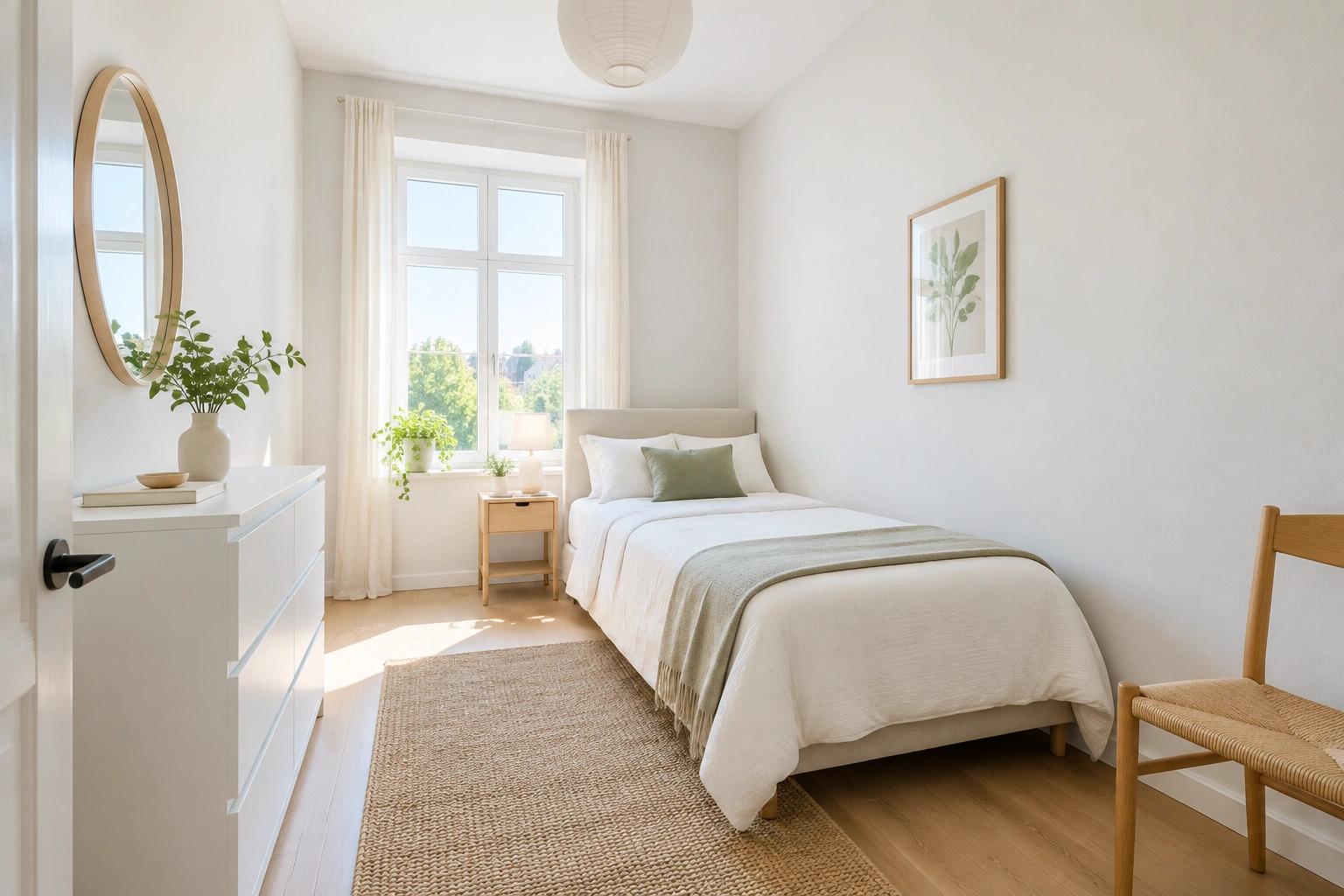
So the honest answer is: white ceilings often help, but they work best as part of a bigger visual strategy.
Why a White Ceiling Can Create the Illusion of Height
A ceiling feels low when your eye keeps stopping at it. White helps because it softens that stop.
Here’s what’s happening visually:
- White reflects more light than darker colors, so the ceiling tends to recede instead of feeling heavy.
- A lighter overhead surface usually looks less “present.” Your eye notices it less, which can make the room feel more open.
- The transition between wall and ceiling can feel cleaner. When the ceiling doesn’t compete for attention, the room can seem airier.
That doesn’t mean white automatically makes every ceiling look higher. It means white often removes some of the visual weight that makes a room feel compressed.
Think of it this way: a dark or saturated ceiling can feel like it’s pressing down if the room is already tight. A white ceiling usually does the opposite. It gives the eye a lighter finish to land on, which can make the upper part of the room feel less crowded.
When a White Ceiling Works Best — and When It Won’t Help Much
A white ceiling is most effective when the room already has a few height-friendly features.
It works best when:
- The walls are light or medium-light
- The room gets some natural light
- The ceiling has a simple shape
- The furniture isn’t too tall or bulky
- The room is already fairly uncluttered
In those spaces, white helps the ceiling disappear a little, which can make the whole room feel more open.
It helps less when:
- The room is very dark overall
- There’s little daylight and weak artificial lighting
- The walls are deep, saturated colors
- The room has heavy beams, strong texture, or awkward proportions
- Large furniture blocks the visual line of sight
A white ceiling can still improve brightness in those rooms, but brightness and height are not the same thing. If the room is cave-like, the ceiling color alone usually won’t solve it.
Simple decision rule
If your room feels low because it’s dark, white will probably help.
If it feels low because it’s cramped, crowded, or poorly proportioned, white may help only a little unless you change something else too.
What You’ll Need Before You Paint
Before you start, gather what you need so the job stays clean and manageable.
Basic supplies
- Ceiling paint in white or soft white
- Primer if the ceiling has stains, patch marks, or a dramatic color
- Painter’s tape
- Drop cloths or plastic sheeting
- Roller with an extension pole
- Angled brush for edges
- Paint tray and liner
- Step ladder
- Spackle and sandpaper for small repairs
A few practical checks
- Look at the ceiling under daylight and lamp light. Ceiling flaws often show differently depending on the time of day.
- Check the existing finish. A shiny ceiling can make imperfections more obvious.
- If you rent, confirm what’s allowed. Some landlords are fine with paint updates if you return the room to its original color later.
If the ceiling already has stains, patch marks, or uneven texture, primer matters more than people think. White paint is unforgiving on damaged surfaces.
Best White Shades and Paint Finishes for Ceilings
Not all white ceilings look the same.
Bright white vs. soft white
Bright white gives the crispest, cleanest look. It can be a strong choice if:
– the room is dim,
– the trim is already a bright white,
– and you want the ceiling to feel fresh and airy.
The trade-off: bright white can feel stark in a room with warm wood, beige walls, or softer finishes.
Soft white or off-white feels gentler and usually blends more easily with warm undertones. It can be a better fit if:
– your walls are cream, greige, or warm gray,
– your trim isn’t a sharp white,
– or you want the ceiling to feel quieter.
The trade-off: it may not create as much contrast or brightness as a crisp white, so the height effect can be a little subtler.
Matte vs. satin or semi-gloss
For most ceilings, matte or flat paint is the safest choice.
Why it works:
– It hides small flaws better
– It reduces glare
– It keeps the ceiling from drawing too much attention
Satin or semi-gloss reflects more light, which sounds helpful, but on a ceiling it often backfires. Any roller marks, seams, or patching can stand out more. In a very smooth, modern space with excellent drywall, a little sheen may be fine. In an average home, matte usually gives the cleaner result.
Best choice by room type
- Low-light rooms: choose a bright white or clean soft white in matte finish to help bounce as much light as possible.
- Warm-toned rooms: choose a soft white or off-white so the ceiling doesn’t look too stark against beige, cream, or wood tones.
- Cool-toned rooms: choose a cleaner white that won’t read yellow next to gray, blue, or cool trim.
- Rooms with visible ceiling flaws: stick with matte or flat paint, because sheen makes imperfections easier to see.
My practical recommendation
If you want the ceiling to look taller without making it shout for attention, choose:
– a matte finish
– a white that matches your room’s undertone
– and a shade that looks calm in both daylight and lamplight
That combination usually does more for perceived height than “the whitest white” alone.
How to Paint a Ceiling White to Make a Room Feel Taller
The painting process matters because clean edges and even coverage help the ceiling recede visually.
1. Choose the right white for the room
Hold paint samples up near the ceiling, trim, and wall color. Look at them at different times of day.
If your room is warm, a cool white can look too sharp. If your room is cool-toned, a creamy white can look dingy. The goal is not just “white.” The goal is a white that belongs in the room.
2. Clear the visual clutter first
Before painting, remove as much from the room as possible. Tall piles, extra chairs, and crowded shelves make the space feel shorter even before the paint goes on.
This step matters because a white ceiling works best when the eye has room to travel upward.
3. Prep the surface
Patch holes, sand rough spots, and clean any dust or residue. If the ceiling has stains, use primer so they don’t bleed through.
A smooth ceiling reads as calmer and more continuous. That continuity helps the room feel taller.
4. Tape and protect the room
Use painter’s tape where needed, but don’t overcomplicate it. Clean cut-in work often looks better than thick tape lines that peel paint.
Cover floors and furniture well. Overhead drips are miserable to clean up later.
5. Paint in a controlled order
Use a brush for edges, then a roller with an extension pole for the main field of the ceiling. Work in manageable sections so the paint stays wet enough to blend.
The goal is even coverage, not thick coverage. Heavy paint marks can catch light and make the ceiling more noticeable.
6. Let the ceiling stay visually quiet
Once the ceiling is painted, keep the room simple for a bit. Rehang curtains, art, and lighting thoughtfully so they don’t fight the new ceiling line.
A white ceiling looks most effective when nothing else is competing to pull the eye downward.
How Wall Color, Trim Color, and Lighting Change the Result

This is where many people misjudge the effect. The ceiling color does not work alone.
Wall color
Light walls usually reinforce the taller look because they blur the transition between surfaces. If the walls are very dark, a white ceiling can create a hard line that feels more dramatic than spacious.
That doesn’t mean dark walls are always wrong. In some rooms, a dark ceiling and walls can make the ceiling plane disappear, which is a different effect entirely. But if your goal is a room that feels taller and lighter, dark walls are usually not the easiest path.
Trim color
The ceiling does not have to match the trim white exactly. It can be the same white for a crisp, continuous look, or it can be a softer/different white when the trim is warmer, creamier, or slightly different in undertone.
Use the exact same white when you want:
– a clean, seamless perimeter
– a simple look in a small room
– the least visual interruption between trim and ceiling
Choose a softer or different white when:
– the trim is warm white, antique white, or off-white
– the room has beige, cream, or warm wood tones
– a bright ceiling white would look too stark next to the trim
Lighting
Lighting can make or break the result.
- Natural light helps white ceilings feel open and airy.
- Layered artificial lighting helps in rooms without much daylight.
- One weak overhead fixture often flattens the room and leaves the ceiling looking dull.
If you want the ceiling to feel higher, light should not only come from one source in the center of the room. Side lighting, lamps, sconces, or multiple small fixtures help the room feel more evenly lit.
Common Mistakes That Make a White Ceiling Less Effective
A white ceiling can underperform when the rest of the room works against it.
Glossy paint on a ceiling
More shine means more attention. That can be useful on trim, but on a ceiling it often highlights flaws and seams.
Choosing a white that clashes with the room
A cool white ceiling in a warm room can look disconnected. A creamy white in a cool gray room may read slightly yellow.
Pairing white with very dark walls
High contrast is not automatically bad, but in a small room it can make the ceiling line feel sharper instead of higher.
Ignoring the room below the ceiling
If the room is packed with tall furniture, heavy drapes, and lots of visual noise, the ceiling won’t get much help from the rest of the space.
Skipping prep
Patchy ceilings, stains, and roller marks are more noticeable when the color is light.
Troubleshooting: If the Room Still Feels Low or Cramped
If the ceiling is white and the room still feels closed in, the problem is probably bigger than paint.
Try these fixes next:
- Lower the visual weight of furniture. Choose pieces with legs or slimmer profiles.
- Pull clutter off the floor. Open floor space helps a room feel taller.
- Use taller curtains hung close to the ceiling. This draws the eye upward.
- Add more light sources. A ceiling that’s white but poorly lit can still feel flat.
- Keep wall décor higher and lighter. Large dark art near eye level can make the room feel heavy.
If the room is especially awkward, layout matters just as much as color. A better furniture arrangement can create longer sightlines, which helps the ceiling feel less oppressive.
For more layout help, I also like pairing ceiling updates with a smarter room plan, like in my guide on making a small living room feel balanced or working out an awkward living room layout.
Practical Examples for Different Rooms
Small bedroom
A bedroom with low ceilings usually benefits from a soft white ceiling and light walls. The room feels calmer when the ceiling doesn’t visually compete with the bed, curtains, and lamps.
Narrow hallway
Hallways often have little natural light, so a white ceiling can help them feel brighter. If the walls are also light, the hallway usually feels less tunnel-like.
Rental living room
Painting only the ceiling can be a smart low-commitment update if the landlord allows it. It’s one of the simplest ways to reduce the boxed-in feeling without changing the whole room.
Basement room
A white ceiling helps in basements, but it usually needs support from better lighting. In a dark basement, the ceiling color alone rarely does enough.
Small home office
If the room feels cramped on camera or during work hours, a white ceiling paired with a tidy wall color and a simple layout can make the space feel more focused and less closed in.
Other Ways to Make a Ceiling Feel Higher
If white paint helps but doesn’t fully solve the problem, these tricks can make the effect stronger:
Keep the top of the room visually light
Use lighter curtains, lighter wall art, and fewer dark objects high on the walls.
Draw the eye upward
Hang curtain rods closer to the ceiling. Even in a small room, that vertical line helps.
Use vertical elements carefully
Tall bookcases, narrow art, or vertical stripes can suggest height, but only if they don’t make the room feel busy.
Reduce ceiling clutter
Fans, bulky fixtures, and too many hanging objects can make the ceiling feel lower. A simpler fixture often reads better.
Improve the lighting plan
A room feels taller when light reaches corners and walls evenly. One lonely ceiling light usually doesn’t do enough.
When to Call a Space Planner
If the room has a structural issue — a very low ceiling, awkward angles, oversized built-ins, or a layout that blocks sightlines — paint may only do part of the job. That’s when a space planner or interior designer can help you find the few changes that will matter most, instead of guessing and repainting over and over.
Bottom Line
Painting the ceiling white can absolutely help a room feel taller, but the effect is strongest when the rest of the space supports it. Choose a white that fits the room’s undertones, keep the finish matte, and pay attention to lighting and wall color. If the room is dark, crowded, or awkwardly proportioned, white paint will still help — just not enough on its own.