
Should You Float Furniture in a Small Living Room? A Practical Layout Guide

A small living room can feel cramped fast, so every furniture decision matters. Floating furniture — pulling a sofa, chairs, or a table away from the walls instead of pressing everything to the perimeter — can help a room feel more open and purposeful. But it is not automatically the best move in a tight space.
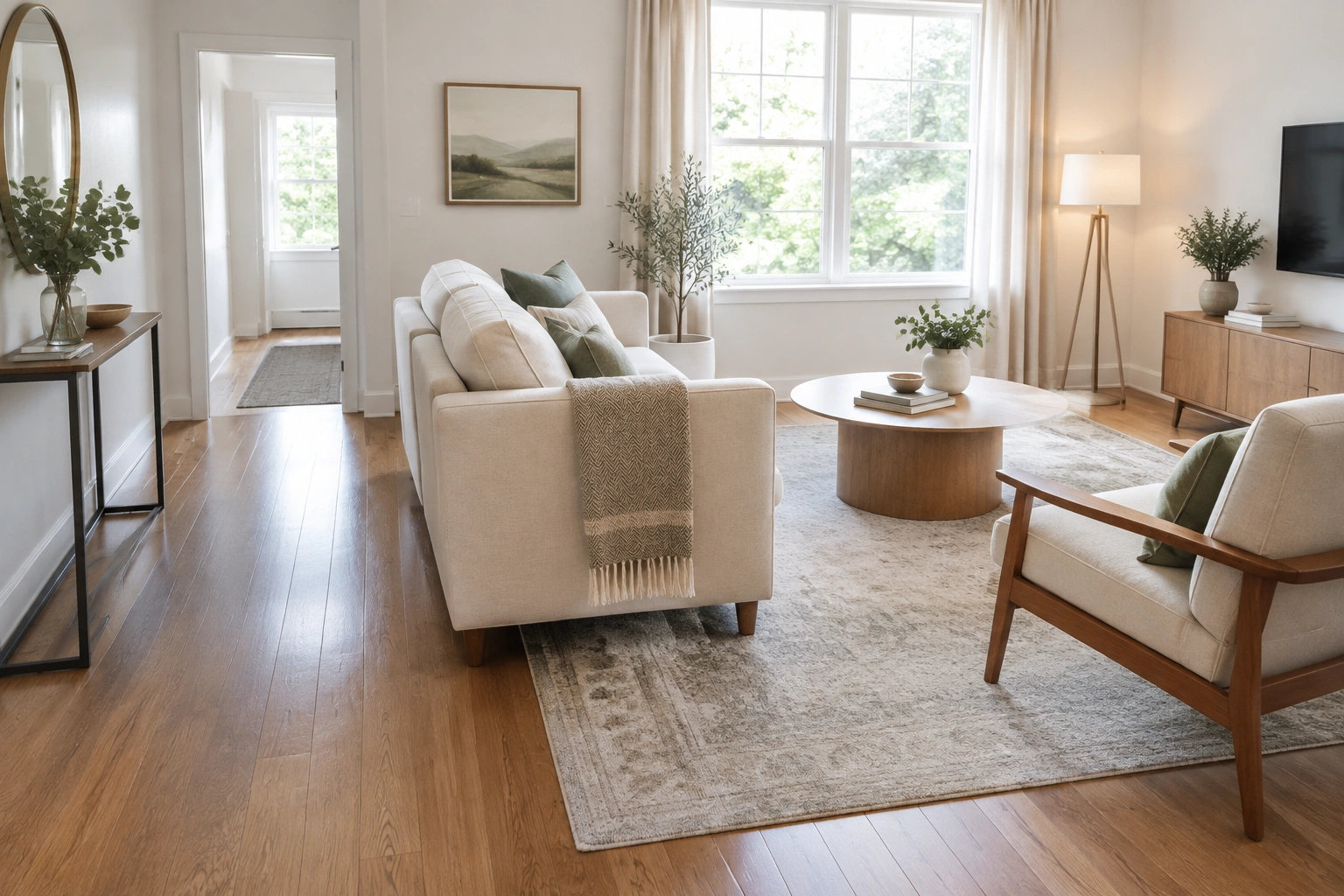
The short answer: yes, sometimes you should float furniture in a small living room, but only when the room has enough circulation space and a clear reason for the layout. If floating the arrangement improves flow, creates a better conversation area, or solves an awkward shape, it can work beautifully. If it blocks walkways or steals too much usable floor space, wall placement is usually the calmer choice.
In other words, floating furniture can make a small living room look bigger or smaller depending on circulation and scale.
One useful way to think about it: floating furniture is not about putting pieces in the middle of the room for style points. It is about giving the room a job. When the layout has a clear anchor, the space usually feels less random and less crowded.
What Floating Furniture Means in a Small Living Room
Floating furniture simply means a piece is placed away from the wall rather than lined up against it. In a living room, that often means the sofa sits a few inches or a few feet off the wall, or chairs and a coffee table form a seating zone in the center of the room.
That is different from wall-hugging placement, where the sofa, chairs, and tables all get pushed to the edges to “save space.” Wall placement can work well in a small room, especially if the room is very narrow or needs a clear open path through the center. But it can also make the room feel flat, with all the weight parked around the perimeter.
There is also a middle ground: partial floating. That means you pull the main seating piece away from the wall just enough to create breathing room, but you do not commit to a full center-of-room arrangement. In small living rooms, that compromise often gives you the best of both worlds.
Should You Float Furniture Here? Quick Decision Rules
Use this quick test before moving anything.
Float furniture if:
- The room has a natural path that cuts through the space, and wall placement would block it.
- You need to define a conversation area, not just line up furniture around the edges.
- The room shape is awkward, and floating one anchor piece helps the layout make sense.
- The sofa can move off the wall without making the remaining walkway feel tight.
Keep furniture against the wall if:
- The room is extremely narrow and every inch of floor space matters.
- A floated sofa would interrupt the main route to a door, hallway, or other room.
- The room already feels small and crowded before you add a rug, table, and chairs.
- You mainly need one clear open zone for movement, play, or multipurpose use.
For a deeper look at spacing and layout basics, this guide on arranging furniture in a small living room without crowding the space pairs well with this one.
Prerequisites: What to Check Before You Move Anything
Before you decide on a floated layout, look at the room as a whole, not just the sofa wall.
1. Identify the room’s main job
Ask what the room needs to do most often:
- Conversation-first: seating should face each other comfortably.
- TV-first: sightlines matter more than symmetry.
- Fireplace-first: the hearth may become the anchor.
- Multi-use: the room may need to handle lounging, reading, and traffic all at once.
If the room has one clear purpose, floating furniture is easier to plan. If it has three competing purposes, you may need a simpler layout.
2. Trace the traffic path
Walk the room the way you actually use it. If you enter from one side and exit through another, the furniture should support that movement, not fight it. Clear pathways matter because cluttered routes make a small space feel even smaller.
3. Check the scale of your pieces
A floated layout can fail simply because the furniture is too bulky. A large sofa, oversized coffee table, and two heavy chairs can overwhelm a compact room even if the spacing is technically correct. In a small space, scale matters as much as placement.
4. Decide whether you need a visual anchor
Floating furniture usually looks better when it sits on or around a rug, table, or lighting plan that makes the arrangement feel intentional. Without that anchor, the room can look like pieces were abandoned in the middle.
Tools and Materials for a Renter-Friendly Floating Layout
You do not need anything complicated to test a floated setup. A renter-friendly layout usually comes down to measuring and moving, not modifying.
Gather these basics:
- Measuring tape
- Painter’s tape or removable floor markers
- Area rug
- Sofa, loveseat, or chairs
- Coffee table
- Side table
- Floor lamp or table lamp
- Optional: a compact media console or storage piece
If you are planning around a TV, a compact console can help preserve floor space. A smaller unit is often easier to fit in a small living room, but the right size depends on the wall, the TV, and the rest of the furniture rather than a single fixed width.
How Much Clearance to Leave Around Floating Furniture
Spacing is where many small-room layouts go wrong. Too little clearance makes the room feel pinched. Too much clearance makes the furniture feel disconnected.
A practical starting point is to leave enough room for comfortable passage between major pieces. One sofa-arrangement source recommends 30–36 inches of clearance between major furniture pieces for comfortable movement through the room. That range is useful for planning a walkway, but your actual room may need a little more or less depending on doors, corners, and the size of the furniture.
Here is how to use that number without overthinking it:
- Use the higher end of the range where people actually walk through.
- Use less only where the area is not part of the main path.
- Do not squeeze a walkway so tightly that you have to turn sideways to pass.
For furniture-to-wall spacing, there is no universal rule that works for every room. In a small living room, even pulling a sofa off the wall by a few inches can make the layout feel more deliberate and easier to read. In a very tight room, a practical rule of thumb is to start with a small gap and only increase it if the walking path still feels comfortable. If the sofa is floated for circulation, the space behind it should still feel usable rather than stranded.
Step-by-Step: How to Float Furniture in a Small Living Room
1. Choose the anchor piece first
In most small rooms, the sofa is the anchor. In a room with a fireplace or a very small footprint, two chairs or a loveseat may work better as the main shape.
2. Place the anchor based on the room’s traffic
Do not start with the wall. Start with the path. If people need to pass behind the sofa, leave enough room for that route before you place anything else.
3. Add the rug to define the zone
The rug should help the seating group feel like one unit. A rug that is too small can make floating furniture look scattered, especially in a small room. In many living rooms, an 8×10 rug is a common practical starting point, but the room shape and furniture scale still matter. The key is to avoid forcing a rug that visually shrinks the seating area.
4. Place the coffee table at a usable distance
The coffee table should be close enough to reach from the sofa or chairs without stretching, but not so close that knees hit it every time someone sits down. In a small room, a compact table often works better than a bulky one with heavy legs or a thick base.
5. Add one or two side pieces only if they earn their place
A side table or floor lamp should solve a real problem: where a drink goes, where reading light comes from, or how the zone feels anchored. If a piece does not improve function, leave it out.
6. Test the walking paths
Walk around the arrangement. Move from the doorway to the sofa, from the sofa to the kitchen or hallway, and from the TV to the seating area if needed. If you keep catching the edge of a table or turning awkwardly, the layout is too tight.
Best Furniture Pieces to Float in Tight Spaces
Not every piece is equally easy to float.
Sofa
A sofa can work as the main floating piece if the room has enough depth. It creates a clear boundary and helps define the seating area. The trade-off is that it is also the most likely piece to block circulation if the room is narrow.
Loveseat
A loveseat is often easier to float than a full sofa in a very small room. It gives you the visual benefit of a centered layout without taking as much floor space. If your room feels tight with a standard sofa, this is often the first piece worth downsizing.
Armchairs
Chairs are flexible and usually the easiest pieces to move around. They are especially useful when you want a conversation area but do not want to commit the whole room to a floated sofa.
Coffee table
A coffee table can anchor the seating group, but it can also crowd the room quickly if it is too large. In a small living room, a lighter visual profile usually works better than a heavy block.
Floor lamp
A floor lamp is a strong helper in floated layouts because it adds height and signals that the seating zone is intentional.
How to Anchor a Floated Layout So It Feels Intentional
Floating furniture works best when the eye knows where to land.
An area rug is usually the simplest anchor. It tells the room, “This is the seating zone.” The rug should connect the furniture pieces rather than sit awkwardly under only one leg of the sofa.
Lighting is the next layer. A floor lamp near a chair or beside the sofa makes the arrangement feel finished, especially in a room without built-in overhead drama.
A coffee table or nesting tables can also help the layout feel grounded. Just keep the surface size proportional to the room so the center does not become a clutter magnet.
If the room has a TV, the media console should not overpower the layout. A compact unit preserves more breathing room around the seating area and keeps the room from feeling wall-to-wall with furniture.
Layout Examples for Different Small Rooms
Narrow living room
In a narrow room, a floated sofa can sometimes improve circulation because it creates a clear route behind or beside the seating. This works best when the sofa does not cut the room in half. If it does, wall placement may be better.
A more practical version in a very narrow room is partial floating: place the sofa just off the wall, keep a slim walkway behind it if needed, and use one chair or a small side table on the open side instead of trying to build a full center grouping.
Square living room
A square room often handles floating more gracefully. Two chairs and a loveseat, or a sofa and one chair, can form a conversation area around a rug without making the room feel stretched.
If your room is square and tricky, this related guide on small square living room layouts may help you map the shape before you commit.
Awkward room with two entry points
When traffic enters from more than one side, floating one anchor piece can keep the room from feeling chopped up. The furniture acts like a guide rail instead of a barrier.
Small room with a fireplace
If the fireplace is the focal point, chairs often float more naturally than a sofa. That keeps the seating oriented toward the hearth without crowding it.
Small room with a TV
A floated sofa can work if the TV wall and the walking route do not compete. If the screen is the main focal point, keep sightlines clean and avoid placing furniture so far forward that it makes the room feel compressed.
For more help deciding what the room should prioritize, see this practical guide on whether a small living room needs a focal point.
Renter-friendly setup in a tight room
If you rent and the room is especially tight, try a partial float instead of a full center layout. For example, place the sofa a few inches off the wall, add a small rug under the front legs, and use one movable chair across from it. That keeps the room flexible, avoids permanent changes, and still gives the seating area some definition.
When Floating Furniture Is Not the Best Choice
Sometimes the best layout is the least dramatic one.
Skip floating furniture if the room is so tight that a sofa off the wall would shrink the usable path. Skip it if the room has vents, radiators, or doors that would be blocked by a centered piece. Skip it if the room already feels busy and a floated arrangement would add another layer of visual clutter.
Wall placement can also be the better choice when the room is mostly functional and not meant for long conversation. In that case, a clean perimeter layout may feel calmer and more forgiving.
Common Mistakes That Make a Small Room Feel Smaller
The biggest layout mistakes are usually about scale and circulation, not style.
- Floating oversized furniture: a big sofa or heavy coffee table can swallow the room.
- Leaving random gaps: too much space between pieces makes the room feel disconnected.
- Blocking the natural route: if people have to weave around furniture, the room feels smaller instantly.
- Skipping the anchor: without a rug or lighting plan, the layout can look accidental.
- Using too many small pieces: a room full of tiny items can feel busier than one or two well-chosen pieces.
A floated layout should feel edited, not crowded.
Troubleshooting a Floated Layout That Feels Off
If the room feels cramped after you float the furniture, do not assume the whole idea failed. Usually one adjustment fixes it.
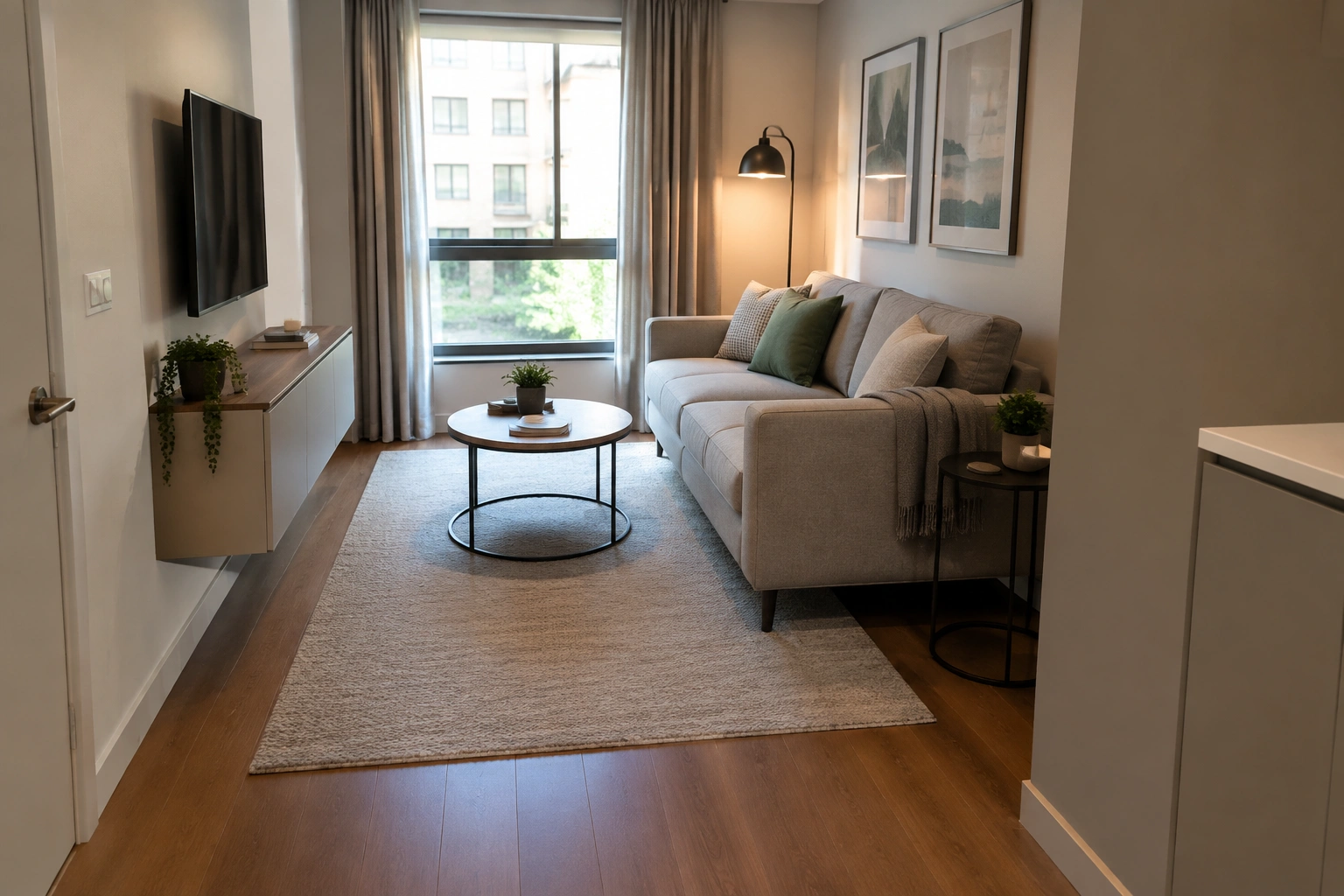
- Move the sofa slightly closer to the wall if the gap is wasted.
- Remove one side table or chair if circulation is tight.
- Use a simpler coffee table shape.
- Shift the rug so the seating zone reads as one unit.
- Try partial floating instead of a full center arrangement.
If the room feels awkward rather than cramped, the problem is often the anchor point. A better focal direction — toward a fireplace, TV, or window — can make the whole room settle.
Practical Takeaway: The Best Choice for Most Small Living Rooms
So, should you float furniture in a small living room?
Sometimes — but only when it improves the room’s flow, shape, or function. If floating a sofa or chairs creates a clearer path and a better seating zone, it is usually worth trying. If it steals circulation or forces the room into a tight obstacle course, wall placement is the smarter move.
For many small living rooms, the best answer is not full floating or full wall-hugging. It is a partial float: enough space to breathe, enough structure to feel intentional, and enough openness to keep the room easy to live in.
FAQ
Does floating furniture make a small living room look bigger?
It can, but only if the layout supports circulation and the pieces are scaled correctly. A floated arrangement can make a room feel more open and intentional when it creates clear paths and avoids visual crowding.
How far should a sofa float from the wall in a small living room?
There is no single correct distance. In a small room, start with a small gap and adjust based on traffic flow. If the sofa is part of a walkway, make sure the route still feels comfortable rather than squeezed.
Is partial floating better than full floating in small spaces?
Often, yes. Partial floating can give you the look of a floated layout without taking over too much floor space, which is especially helpful in narrow or renter-friendly rooms.
What is the easiest piece of furniture to float?
Chairs are usually the easiest because they are flexible and easier to reposition. A loveseat can also be easier than a full sofa in a very small room.
Should I float furniture if my living room is very narrow?
Only if the layout still leaves a clear path. In very narrow rooms, partial floating or wall placement is often more practical than trying to center the whole arrangement.