
Which Flooring Makes a Small Living Room Look Bigger? The Best Colors, Planks, and Finishes

If you want a small living room to feel more open, the flooring choice that usually helps most is light to mid-tone flooring with wide planks, a simple finish, and as few visual breaks as possible. In plain terms: pale oak, warm beige, natural blonde wood, whitewashed tones, or soft greige tend to feel airier than dark, high-contrast floors. Wide boards usually look calmer than narrow strips, and a satin or matte finish often gives the room a softer, less busy feel.
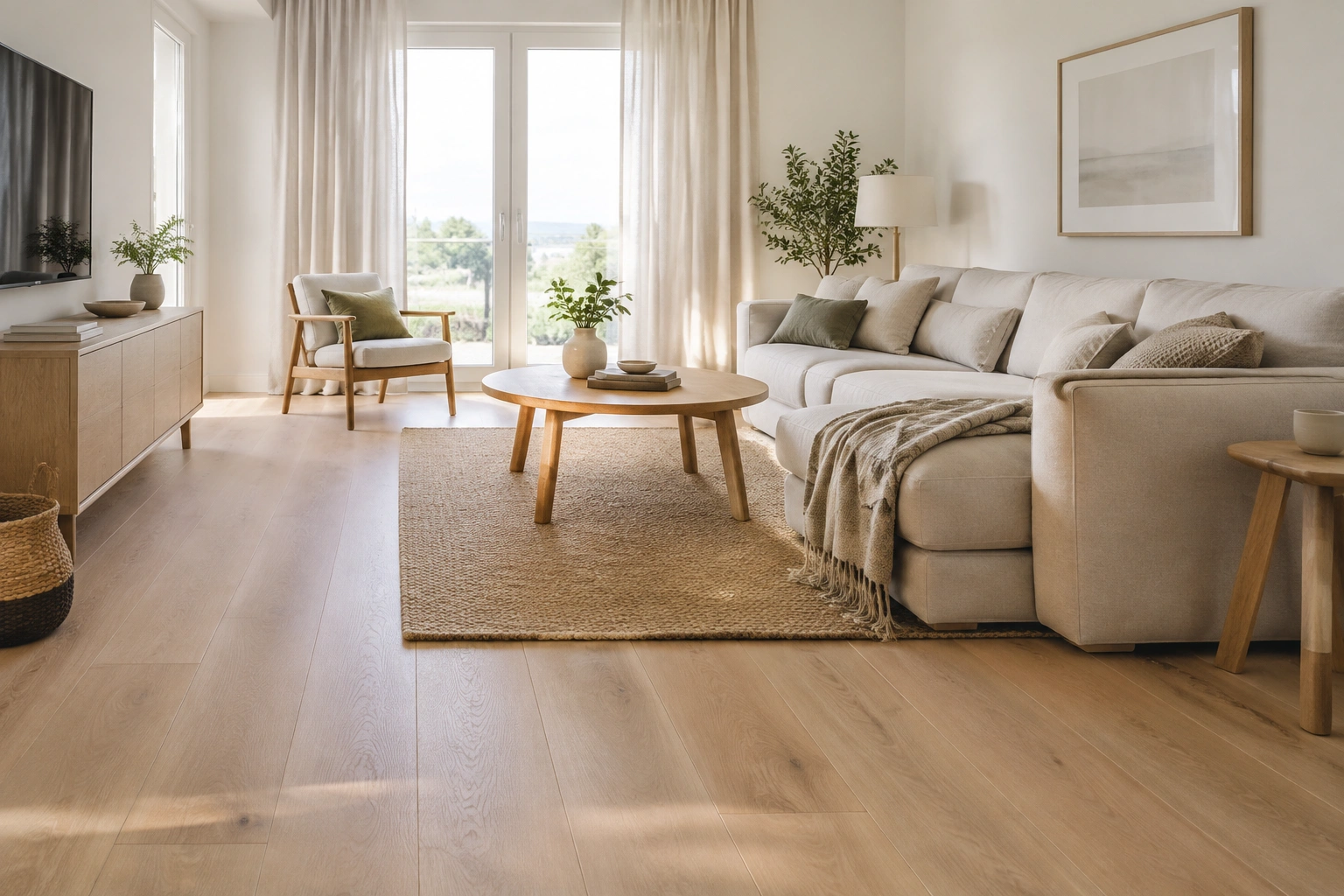
A direct answer to the biggest question: light floors usually make a room feel larger, but mid-tone floors can be the better practical choice when glare, dirt, or harsh sunlight are concerns.
That does not mean dark floors are always wrong. Dark flooring can look rich and grounding, especially in a room with lots of daylight. But in a compact living room, dark floors often pull the walls inward visually unless the rest of the room is very light and uncluttered.
The best choice is the one that reduces visual clutter while still fitting your furniture, light, and lifestyle. Here’s how to pick it with confidence.
How Flooring Changes the Way a Small Room Feels
A small room looks bigger when your eye can move through it easily. Flooring affects that in three main ways:
-
Brightness
Lighter floors reflect more light back into the room, so the space usually feels less heavy. This is why light to mid-tone flooring is often recommended as a neutral foundation in small living rooms. -
Seams and lines
Every plank edge, grout line, or pattern repeat is another visual break. Fewer breaks usually mean a calmer look. That is one reason wide planks often work so well in compact rooms. Pattern matters almost as much as color, because high-contrast seams, grout, and busy repeats can make a floor feel visually smaller. -
Flow
Flooring direction guides the eye. In a small room, the direction should be chosen intentionally: lengthwise if you want to elongate a narrow room, widthwise only if you are deliberately trying to widen a very narrow room, and continuous with adjacent flooring whenever possible so the space feels more connected.
A useful way to think about it: the best small-room flooring does not shout for attention. It gives the room one clean visual field so the furniture, light, and architecture can breathe.
Best Flooring Colors for a Small Living Room
Light floors: the safest way to open up a room
Light flooring is the easiest route to a brighter, more spacious feel. Think pale oak, blonde maple, white oak, soft sand, light taupe, or washed wood tones. These finishes help the floor disappear a little into the background, which makes the room feel less segmented.
This is especially helpful if your living room has:
– one small window
– darker furniture
– low ceilings
– a lot of visual activity already, like bookshelves or media storage
A light floor does have a trade-off: dust and dirt can still show, just in a different way than on dark floors. So if you want an airy look without constant fuss, choose a tone with a little warmth or grain instead of a flat, stark white.
Mid-tone floors: the practical middle ground
If you want a room to feel open but not washed out, mid-tone flooring is often the sweet spot. Natural oak, honey oak, soft walnut-brown, and muted greige wood tones can still feel spacious if they are not too red, too dark, or too busy.
Mid-tones are especially useful in rentals or family homes where you need flooring that looks forgiving and works with changing decor. They usually hide everyday wear better than very pale flooring, while still feeling lighter than espresso or charcoal.
Dark floors: dramatic, but harder in small rooms
Dark flooring can add contrast and depth, and in some rooms that creates a beautiful, tailored look. The trade-off is that dark floors often make a small living room feel more enclosed, especially if the walls, trim, and furniture are also dark.
If you already have dark flooring, the room can still work. The trick is to lighten everything above it:
– choose a lighter rug
– keep curtains airy
– use furniture with visible legs
– avoid heavy dark sofas against dark floors
Gray, whitewashed, and natural wood tones
Gray floors can be tricky. A soft, warm gray can work well, but cool gray floors sometimes feel flat or chilly in a small room, especially if the lighting is dim. Whitewashed floors can look very open, but too much whitewash can create glare or a washed-out effect if the room already gets a lot of direct sun.
Natural wood tones are usually the safest long-term choice because they feel timeless and flexible. They also tend to work better than trendy tones when you want the room to stay visually calm.
Wide Planks vs. Narrow Planks: Which Looks More Spacious?
Wide planks usually make a small living room look bigger because they reduce the number of seams the eye has to process. That creates a cleaner, less chopped-up floor plane. One flooring guide notes that selecting wide floor planks is one of the easiest ways to make a room look bigger, and that matches what many designers rely on in small spaces. Flooring design tips for small rooms
Narrow planks can still work, but they tend to create more visual lines. In a tiny room, that extra linework can make the floor feel busier than it needs to be.
Here’s the trade-off:
– Wide planks: calmer, more open, usually better for small living rooms
– Narrow planks: more traditional or detailed, but often visually busier
If you are choosing between two nearly identical floors, pick the one with the wider board.
Which Direction Should Flooring Run in a Small Living Room?
Use this simple rule set:
- Run flooring lengthwise in a narrow room when you want to elongate the space.
- Run flooring widthwise only when you are intentionally trying to make a very narrow room feel wider.
- Match the direction of adjacent flooring whenever possible so the room feels more continuous and less chopped up.
For most small living rooms, lengthwise installation is the safer default because it creates a stronger sense of depth. Widthwise installation can work in very narrow rooms, but it is a more deliberate choice and usually works best when you want to emphasize width rather than length.
A practical rule of thumb:
– Very narrow room: lengthwise is usually the best starting point
– If the room feels too tunnel-like: widthwise can help widen it, but only if that is the effect you want
– Open-plan living area: keep flooring continuous if possible so the eye moves smoothly between zones
If you are replacing only one room’s floor, matching the direction of adjacent flooring can also reduce visual interruption.
Best Finish: Matte, Satin, or Glossy?
Finish changes how much light the floor throws back into the room.
Matte finish
Matte floors usually feel soft, calm, and natural. They do not reflect as much light as glossy finishes, but they also hide minor scratches and dust better. If you want a quiet, lived-in look, matte is a strong choice.
Satin finish
Satin is often the best all-around finish for a small living room. It reflects enough light to keep the room from feeling dull, but it does not usually create the shine or glare of a glossy surface. That balance is why satin works well in rooms that need brightness without looking slick.
Glossy finish
Glossy floors reflect the most light, which can help brighten a darker room. The downside is that they can show glare, footprints, and surface wear more easily. In a small living room, that extra shine can also make the floor feel visually busier.
If your room is already bright, glossy flooring may be more reflection than you need. If your room is dim, a satin finish is usually the safest middle path.
Best Flooring Materials for Small Living Rooms
The material matters because it affects plank width, finish, cost, and how easy the floor is to live with. Ranked from most to least likely to create a visually spacious feel, the materials below generally follow this order: LVP or laminate with wide light planks, hardwood in a light natural tone, large-format tile, and carpet.
| Material | Best visual effect | Main trade-off | Best for |
|---|---|---|---|
| LVP | Often available in wide, light planks that visually open a room | Look and feel vary by product | Renters and busy households |
| Laminate | Can mimic light wood well and keep seams subtle with wider planks | Can feel less substantial than real wood | Budget-conscious updates |
| Hardwood | Warm, classic, natural depth | Usually more expensive and less forgiving of wear | Homeowners who want a long-term floor |
| Tile | Clean and bright in the right tone | Grout lines can add visual segmentation | Very sunny rooms or modern looks |
| Carpet | Softens the room and reduces hard edges | Can make the room feel smaller if dark or heavily textured | Cozy spaces where softness matters more than openness |
Hardwood
Hardwood can make a small living room feel warm and timeless, especially in pale oak or natural finishes. It works best when the grain is subtle and the tone is not too dark.
Laminate
Laminate is a smart choice when you want the look of wood without the higher cost. In a small room, look for wider planks and a restrained grain pattern so the floor does not feel busy.
Luxury vinyl plank
LVP is often the most flexible option for small spaces because it comes in many light, wide-plank looks and is practical for rentals or active households. It can be one of the easiest ways to get a spacious look without a major renovation.
Tile
Tile can look crisp and bright, but grout lines add visual division. In a small living room, that segmentation can work against the open feel unless the tile is large-format and the grout is close in color.
Carpet
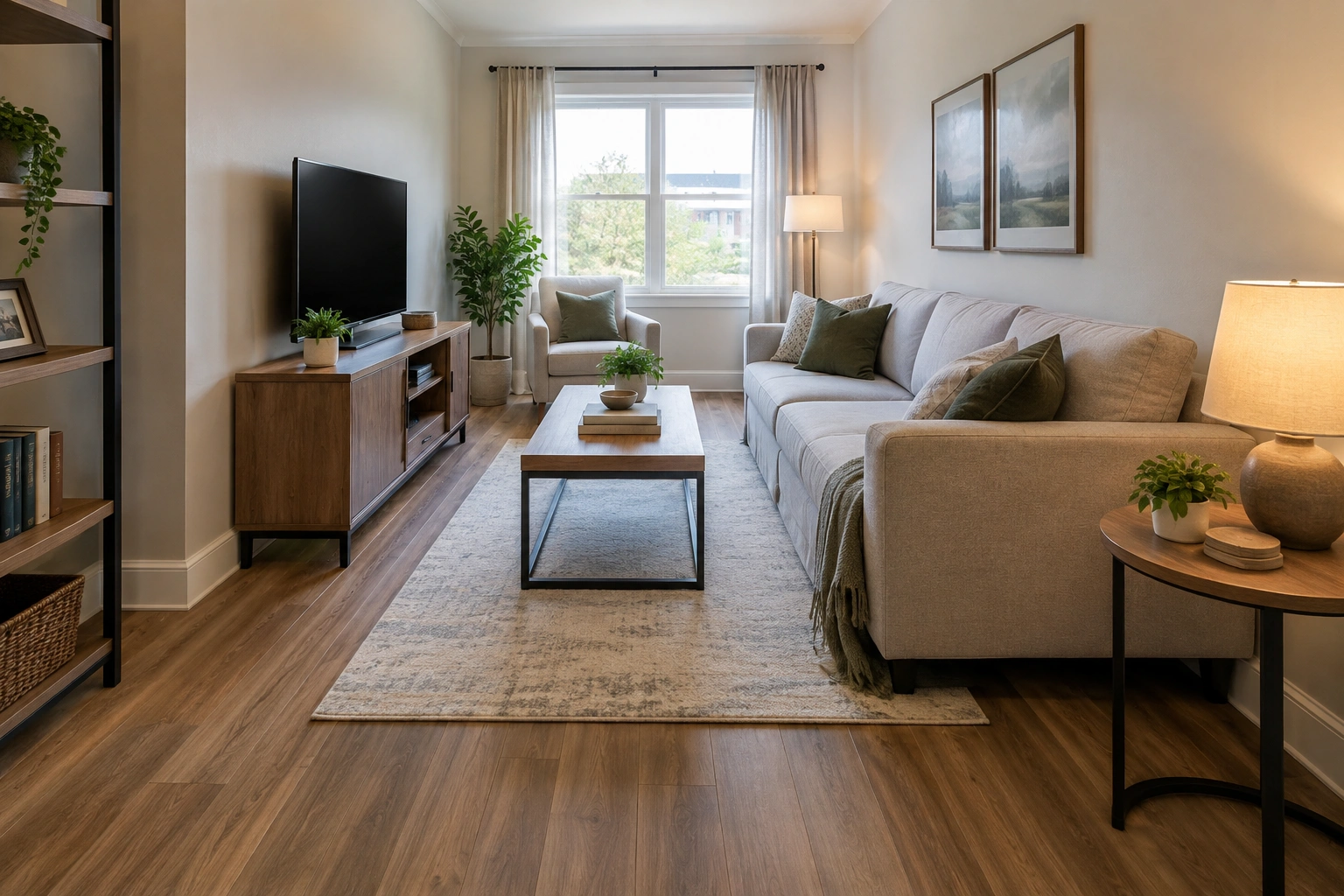
Carpet softens a small room, but it can also absorb light and make the space feel more enclosed if it is dark or heavily patterned. If you want carpet, choose a light, low-contrast tone and keep the texture subtle.
How to Choose Flooring That Makes Your Living Room Look Bigger
Use this decision process when comparing samples.
1. Look at the room’s light first
If the room is dim, prioritize a lighter floor and a finish that reflects some light. If the room gets strong sun, you can usually handle a slightly deeper tone without making it feel closed in.
2. Choose the quietest color that fits your furniture
The floor should support the room, not compete with it. If your sofa, rug, and curtains already bring in a lot of pattern or color, keep the floor simpler.
3. Pick the widest plank that fits your budget
When two options are close, the wider plank usually wins in a small room because it creates fewer seams.
4. Check the room shape
For a narrow room, choose the direction that best supports the effect you want: lengthwise to elongate, or widthwise only if you are intentionally trying to widen the room. For a square room, the goal is usually balance rather than lengthening one dimension too much.
5. Decide how much maintenance you can live with
Very pale floors can look beautiful, but they may demand more visual upkeep. Glossy floors can brighten a room, but they can also highlight every mark.
6. Test samples in the actual room
A floor sample can look completely different under your living room’s light. Place it near the window and again in the darkest corner before deciding.
How to Use Rugs Without Making the Room Feel Smaller
A rug can help define a small living room, but it can also cut the floor into smaller pieces if you choose the wrong size or color.
The easiest rule: let some of the floor show around the edges. That keeps the room feeling open. A rug that is too small often looks like a floating island and makes the room feel tighter than it is.
Good rug choices for small living rooms:
– light or low-contrast colors
– simple patterns
– medium pile or low pile, depending on comfort needs
– a size that fits under the front legs of the sofa if possible
Avoid rugs that:
– have a strong border that boxes in the room
– are much darker than the floor
– cover almost the entire floor unless the room is meant to feel very cozy
A rug should frame the seating area, not hide the floor you are trying to showcase.
Practical Examples for Different Small Living Rooms
A narrow living room
Use pale oak or light LVP in a wide plank, and run it lengthwise if you want to elongate the room. Choose widthwise installation only if your main goal is to make a very narrow room feel wider. Add a simple rug that leaves a border of floor visible on all sides.
A square living room
Choose a natural wood tone or soft greige floor with a satin finish. The room will usually feel best when the floor is calm and the furniture arrangement does the rest of the work.
A dark apartment living room
If replacing the floor is not realistic, brighten what you can: use a lighter area rug, keep furniture legs visible, and avoid a dark-on-dark palette. A room with dark flooring can still feel open if the upper half of the room is light.
A rental with medium-toned laminate
You may not need to replace anything. A large neutral rug, lighter curtains, and less contrast between sofa and floor can make the room feel less cramped without touching the existing surface.
Common Mistakes That Make a Small Living Room Feel Even Smaller
The biggest mistakes are usually visual, not structural.
- Busy patterns on the floor or rug add clutter fast.
- Too many floor tones in one small open area can make the space feel chopped up.
- Wrong plank direction can exaggerate the room’s narrowest dimension.
- Oversized dark rugs can swallow the floor and make the room feel heavier.
- High-contrast grout can segment the floor into too many pieces.
- Mixing several wood tones without a clear plan can make the room feel disjointed.
If you want the room to feel larger, simplify before you decorate.
Troubleshooting: How to Make Existing Flooring Look Less Cramped
If you cannot replace the floor, you still have options.
- Use a rug that is lighter than the floor, not darker.
- Keep furniture legs visible so more floor shows.
- Choose curtains that echo the floor’s brightness.
- Reduce the number of competing wood tones in the room.
- Add mirrors or reflective accents to help the room feel brighter. Reflective surfaces can help amplify natural light and make a room feel more open.
- Layer lighting so the room works from day to night; overhead, table, and floor lamps keep the space flexible.
Those changes do not change the floor itself, but they can change how much attention the floor gets.
When to Call a Space Planner
Call a space planner if your living room has an awkward shape, multiple doorways, or an open-plan layout where flooring direction affects several zones at once. That is especially helpful when you are choosing between two flooring directions, or when you want the floor to work with a fireplace, TV wall, or traffic path.
If you are a renter and only need a temporary update, a full flooring change may not be necessary. In that case, focus on a larger rug, lighter textiles, and a cleaner visual path through the room. If you cannot replace the flooring, rugs and textiles are often the most practical way to improve the room’s scale.
For layout help that works with your floor choice, you may also like my guides on arranging a small living room with a fireplace and fitting furniture into a small living room without crowding it.
FAQ
Do light floors always make a room look bigger?
Usually, yes — light floors tend to make a small room feel more open. But mid-tone floors can be a better practical choice if your room gets harsh sunlight, shows dirt easily, or needs a little more warmth.
What flooring direction is best for a small living room?
In most cases, run flooring lengthwise to elongate the room. Choose widthwise only when you are intentionally trying to make a very narrow room feel wider. If possible, keep the direction consistent with adjacent flooring for a smoother visual flow.
Does pattern matter more than color?
Pattern and color both matter, but pattern can matter almost as much as color in a small room. High-contrast seams, grout, and busy repeats can make the floor feel visually smaller even if the color is light.
What is the best flooring for renters?
For renters, LVP, laminate, and large area rugs are usually the most practical options. If you cannot change the floor, use textiles, lighter rugs, and furniture with visible legs to create a more open feel.
The Bottom Line
If you want a small living room to look bigger, the most reliable combination is light to mid-tone flooring, wide planks, a simple direction that supports the room shape, and a satin or matte finish. That mix reduces visual clutter and helps the room feel calmer, brighter, and more open. Dark floors, narrow planks, and busy patterns can still work, but they usually need more careful styling to avoid making the space feel tighter.