
How to Make a Small Living Room Look Bigger Without Remodeling

If you’ve ever stood in your living room and thought, How can I make a small living room look bigger? the answer is usually less about one magic trick and more about a series of smart visual decisions. The good news: you do not need a renovation to get a room that feels calmer, brighter, and easier to live in.
The biggest shift happens when the room stops fighting itself. That means better flow, fewer visual interruptions, and furniture that fits the scale of the space. Once those pieces are in place, paint, curtains, lighting, mirrors, and decor can do their job more effectively.
Quick Wins That Make a Small Living Room Feel Bigger Fast
If you want the fastest payoff, focus on the things your eye notices first: clutter, dark corners, and bulky furniture. Those are the details that make a room feel cramped before you even sit down.
Here’s the order I’d use in a real home:
- Clear the floor and surfaces.
- Pull oversized pieces out of the walkway.
- Replace heavy textiles with lighter ones.
- Add one mirror or another reflective surface.
- Improve lighting in the corners.
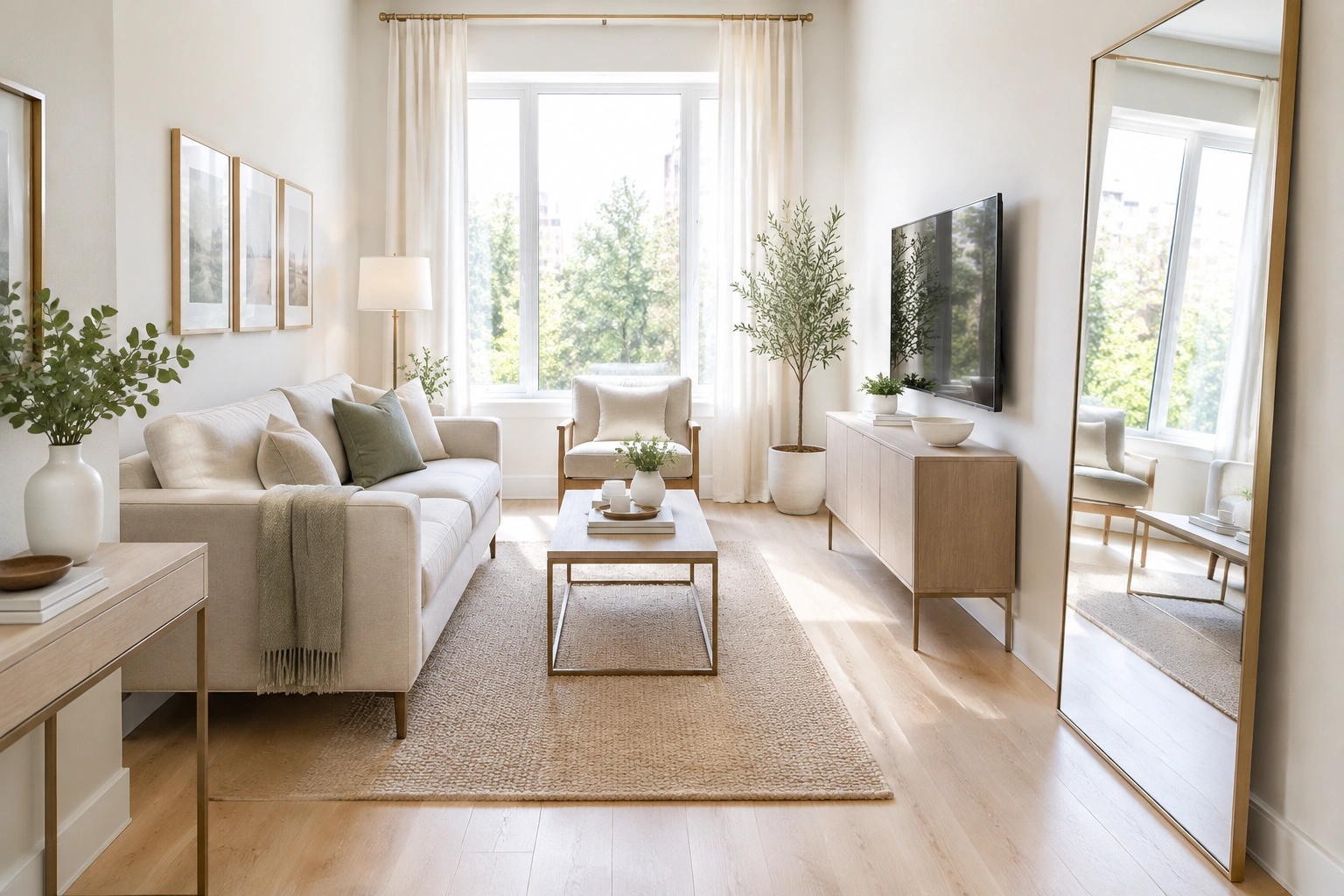
That sequence works because it removes visual weight before you try to add anything back. A room with fewer obstacles and more light can feel easier to breathe in.
If you want a planning-first approach before buying anything, my guide on how to plan a small living room before buying furniture can help you map the space before spending money.
Clear the Visual Noise Before You Change the Decor
A small living room starts to feel larger when the eye has fewer places to stop. That does not mean the room should be empty. It means every item needs to earn its place.
Start with the things that create the most visual clutter in a small room:
- extra throw blankets draped over every seat
- remotes, chargers, and mail piled on tables
- floor items like baskets, toys, or pet supplies
- extra stools or side tables that block the walkway
- too many small decor pieces spread across every surface
Look at the room in three zones:
- Floor: Are there baskets, extra stools, dog toys, or cables creating a busy edge?
- Surfaces: Are tables covered with stacks, candles, remotes, and random catchalls?
- Walls: Are there too many tiny frames or shelves competing for attention?
A useful rule: keep the largest surfaces visually simple and the smallest objects grouped together. One tray with a lamp, a book, and a bowl reads as intentional. Seven loose objects on the same table read as clutter.
For renters, cheap storage can make a big difference without any permanent changes. Try woven baskets under a console, an ottoman with hidden storage, or wall-mounted shelves and hooks that use adhesive strips instead of drilling.
This is also the moment to measure. Check the sofa length, the depth of your chairs, and the width of your main walkways. If a piece blocks a natural path into the room or makes you sidestep every time you pass, it is probably too large for the space.
Choose Furniture With a Smaller Footprint
Furniture scale is one of the biggest factors in whether a small room feels open or crowded. A sofa that is too deep, too boxy, or too tall can dominate the room even if the color is light.
In a compact living room, look for pieces that have:
- visible legs
- slimmer arms
- a narrower depth
- a lower back if the room has low ceilings
- simple shapes instead of chunky profiles
Visible legs matter because they let you see more floor. More visible floor usually makes the room feel less heavy. Low-slung furniture can do something similar by opening up space above it, which helps the room feel less packed.
Clear materials can also help. Glass, lucite, or acrylic pieces tend to recede visually, so a coffee table or side table in one of those materials may feel lighter than a solid wood block. That said, they are not always the best choice if you want a cozy, grounded look. If your room already feels cold, pair a transparent piece with texture elsewhere, like a woven rug or nubby throw.
Sofa decision: sectional or sofa-and-chair?
A sectional can be the right answer when you need maximum seating in one footprint and the room has a simple shape. But in many small living rooms, a sofa-and-chair arrangement preserves better flow. It leaves more room for a walkway, makes it easier to angle seating toward a focal point, and avoids the “wall of upholstery” effect.
If your room is narrow, a smaller sofa plus one lightweight chair often works better than a sectional. If the room is square and your family actually uses every seat, a compact sectional may be the more practical choice.
If you are weighing that decision specifically, I also wrote a practical layout guide on whether a sectional can fit in a 10×10 living room.
Arrange Furniture for Better Traffic Flow
A layout that works makes everything else easier. When the room is easy to move through, it feels less cramped even if the square footage never changes.
The goal is to create a clear path through the room and avoid forcing people to walk around the coffee table, between chair legs, and past a too-large ottoman. If you have to squeeze sideways, the arrangement is too tight.
A simple way to test your layout:
- Mark the main walking route with painter’s tape.
- Place the sofa first.
- Add the largest secondary seat.
- Put the coffee table last.
- Walk the path without turning sideways.
If the room is narrow, floating the sofa a few inches off the wall can sometimes improve the layout more than pushing everything flat against the perimeter. In a square room, floating furniture may also create a better conversation area than lining every piece around the edge.
For a deeper walkthrough of spacing and furniture placement, see how to make a small living room feel balanced without making it feel crowded.
Use Color to Lighten the Room Without Making It Flat
Light colors usually help a small living room feel more open because they reflect more light and reduce visual heaviness. White, cream, pale beige, soft gray, and muted sage can all work well if they stay in the same soft value range.
If the room has low natural light, the best overall palette is usually a light, warm, and low-contrast one: think soft white, cream, pale beige, and a little muted color layered in through accents. Dark colors are not forbidden, but they behave differently. Deep navy, charcoal, or forest green can make a room feel cozy and dramatic, yet they may also make the room feel smaller if they cover too much surface without enough contrast or light. In simple terms, light colors usually open a room up, while dark colors tend to add weight and drama.
A practical rule: if the room gets limited natural light, keep the biggest surfaces lighter. That usually means walls, curtains, and the rug should do most of the brightening. Then bring in contrast through pillows, art, or a wood tone.
To avoid a flat look, layer tones instead of using one exact shade everywhere. For example, pair warm white walls with a cream sofa, a beige rug, and a few darker accent pieces. That keeps the room airy without making it feel bland.
Make Windows Look Bigger With Curtains Placed High and Wide
Curtains can change the way the room reads immediately. Hang them too low or too narrow, and the window looks smaller. Hang them higher and wider, and the wall starts to feel taller and more generous.
The usual visual trick is simple: mount the curtain rod closer to the ceiling and extend it beyond the window frame. That gives the eye a longer vertical line and makes the window appear larger.
Floor-length curtains usually work better than short curtains in a small living room because they create one uninterrupted line from top to bottom. Short curtains tend to cut the wall in half, which can make the room feel shorter and busier.
A few practical guidelines:
- Use curtains that just skim the floor or barely touch it.
- Keep the panels wide enough that they do not block much of the glass when open.
- Choose a fabric with enough body to hang neatly, but not so heavy that it swallows the window.
If you rent and cannot change the window itself, curtain placement is still one of the easiest ways to make the room feel taller without permanent changes.
Add Mirrors and Reflective Surfaces Where They Actually Help
Mirrors are useful because they can bounce light and extend sightlines, especially when they reflect a window or a brighter part of the room. The key is placement. A mirror facing a cluttered corner will simply reflect the clutter.
Place a large mirror opposite or adjacent to a window if you want it to help the room feel brighter and more open. You can also use one near a doorway to extend the sightline into the room, as long as it reflects something calm rather than a busy pile of furniture.
One large mirror often has more impact than several small mirrors when your goal is to make the room feel more open. A single mirror creates one strong visual break and can act almost like another “window” in the room. Several small mirrors can work in a gallery-style arrangement, but they may read as decorative clutter if the wall is already busy.
Use reflective surfaces with restraint:
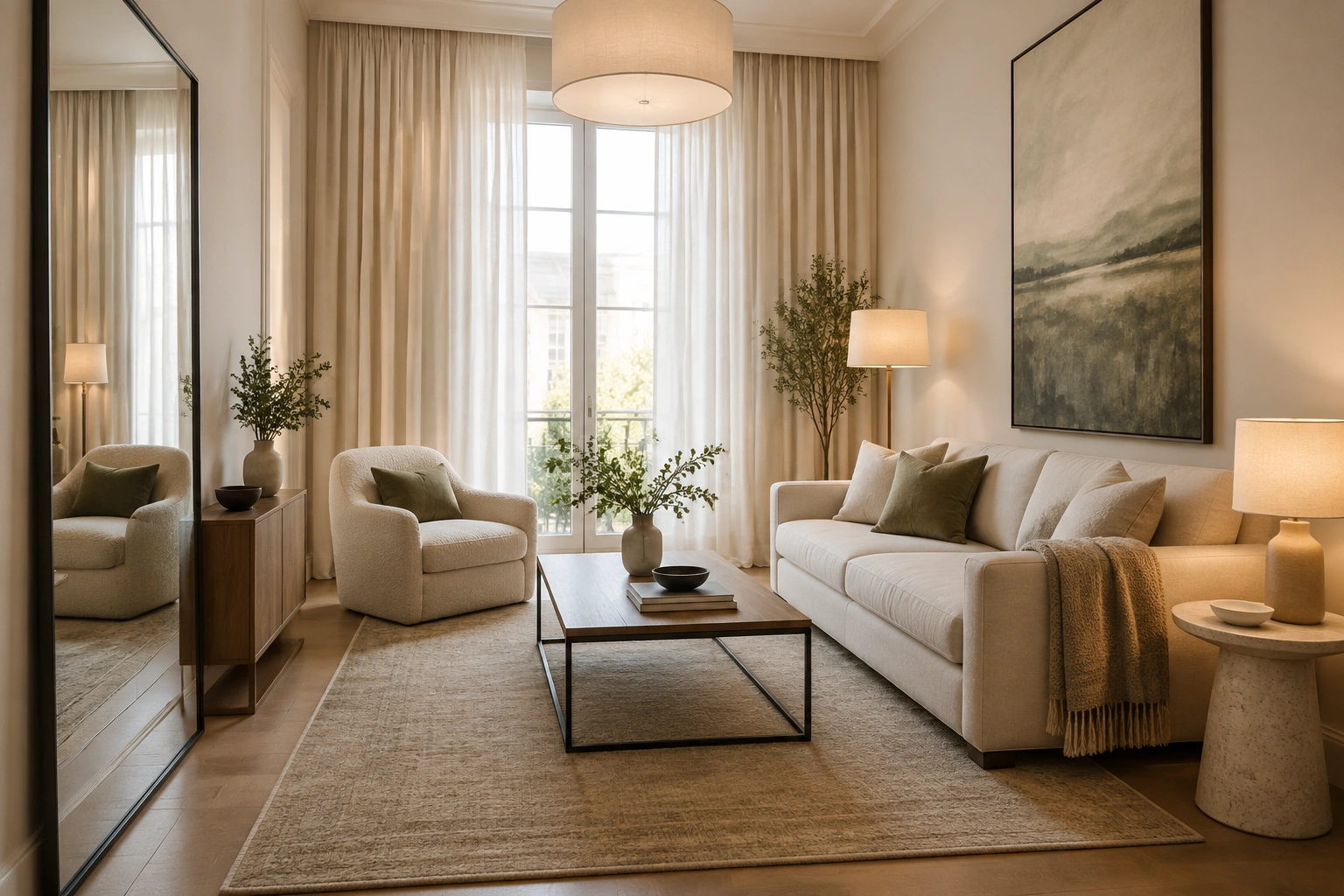
- a glass coffee table
- a polished side table
- a framed mirror above a console
- glossy pottery or a metallic lamp base
These pieces reduce visual weight, but too many shiny surfaces can start to feel cold. I like to pair one reflective item with softer textures so the room stays welcoming.
Layer Lighting So the Corners Don’t Disappear
A single overhead light is one of the fastest ways to make a small living room feel flat and compressed. It throws everything into one plane and leaves corners shadowed, which makes the room feel smaller than it is.
A better approach is layered lighting:
- Ambient lighting for overall brightness
- Task lighting for reading or working
- Accent lighting to highlight a corner, shelf, or piece of art
In practical terms, that might mean a ceiling fixture plus a floor lamp beside the sofa and a table lamp on the opposite side of the room. The goal is not just brightness; it is depth. When light reaches different parts of the room, the space feels more dimensional.
If you only add one extra light, place it where the room feels darkest. Brightening a shadowy corner often changes the whole mood more than adding another lamp near the sofa.
Pick a Rug That Defines the Space Without Breaking It Up
A rug that is too small can make a living room feel chopped into pieces. It creates a tiny island in the middle of the room instead of anchoring the seating area.
In most small living rooms, a larger rug that fits under the front legs of the sofa and chairs usually looks better than a small rug floating in the center. A simple sizing rule is to get at least the front legs of the main seating pieces on the rug so the arrangement feels connected.
Round rug or rectangular rug?
A rectangular rug usually works best when the room is narrow or when the furniture is arranged in a straight line. It reinforces the room’s shape and helps guide the eye through the seating area.
A round rug can soften a square room or make an awkward corner feel less rigid. It is not automatically better for small spaces, though. If the room already has a lot of curves or soft edges, a round rug may not define the seating area as clearly as a rectangular one.
Choose the shape that supports the room’s architecture rather than fighting it.
Use Vertical Lines and Simple Decor to Draw the Eye Up
One of the best ways to make a small living room look bigger is to encourage the eye to travel upward. That can make the room feel taller and less boxed in. Homes & Gardens notes that curtains from floor to ceiling, crown molding, and art placed to emphasize vertical space can help create that effect.
You do not need molding to get the same feeling. You can use:
- tall artwork instead of wide clusters of small frames
- a floor lamp with a slim profile
- a bookcase styled with breathing room on the top shelves
- a plant with upright growth instead of a sprawling one
The trick is to avoid visual clutter near the ceiling line. When the upper wall feels open, the room often seems taller.
Rental-Friendly and Budget-Friendly Updates That Matter Most
If you cannot replace furniture or paint walls, focus on changes that alter how the room reads rather than how it is built.
The best low-cost updates are usually:
- lighter throw pillows and blankets
- a taller lamp or two
- a better-placed mirror
- curtain panels hung higher
- storage baskets that hide small items
- one larger artwork instead of several tiny pieces
A budget refresh does not have to be expensive to be effective. Swapping heavy curtains for lighter ones, clearing a crowded side table, and adding a lamp to a dark corner can shift the room more than buying a bunch of new decor.
For renters, removable changes are the sweet spot. You can improve scale, light, and flow without touching the walls permanently.
Common Mistakes That Make a Small Living Room Feel Smaller
A few choices reliably work against you:
- Oversized furniture: It blocks movement and overwhelms the room.
- Too many small pieces: A dozen tiny accessories can feel busier than a few larger ones.
- Curtains hung low: They shorten the wall visually.
- A rug that is too small: It chops up the seating area.
- Only one light source: It leaves the room flat and shadowy.
- Every wall covered: There is no visual rest.
The biggest mistake I see is trying to fill every inch. A small room needs some open space to feel intentional. Empty space is not wasted space here; it is what lets the room breathe.
Troubleshooting: What to Change If the Room Still Feels Cramped
If the room still feels tight after the basics, diagnose the problem by symptom.
If the room feels narrow
Reduce the depth of the seating and keep the main path clear. A slimmer sofa or a chair with open legs may help more than changing the decor.
If the room feels dark
Add a lamp in the darkest corner and lighten the largest textiles first. Curtains and rugs usually have more impact than adding more small accessories.
If the room feels busy
Take away small items before adding storage. Group what remains into fewer, larger visual moments.
If the room feels awkward
Try floating one piece of furniture instead of pushing everything to the walls. Sometimes the room needs a better shape more than it needs more furniture.
If the room feels cold after decluttering
Bring back warmth with texture: a woven throw, a wood tray, or a textured pillow. Bigger-looking does not have to mean sterile.
Realistic Small Living Room Makeover Scenarios
A narrow rental living room may benefit most from a slim sofa, one chair, a large mirror, and floor-length curtains. That combination usually improves height and flow without requiring permanent changes.
A square living room often works better with a floating sofa and one accent chair than with a bulky sectional. That setup can create a more open center and improve circulation.
A budget refresh can be surprisingly effective if you swap dark textiles for lighter ones, remove extra side tables, and add one table lamp. Those changes reduce visual heaviness without replacing the whole room.
A cluttered family room usually needs hidden storage before it needs new decor. Once the extra items disappear, the room can handle a few larger, calmer pieces on display.
When to Call a Space Planner
If your living room has multiple doors, a very unusual shape, or furniture that must serve several functions at once, a space planner can help you avoid expensive trial and error. That is especially useful when you are choosing between a sectional and a sofa-and-chair layout, or when every possible arrangement seems to block something important.
For most homes, though, the answer to How can I make a small living room look bigger? is already in the room: better flow, better scale, more light, and fewer visual interruptions.