
How to Make a Tiny Living Room Feel Airy Without a Remodel

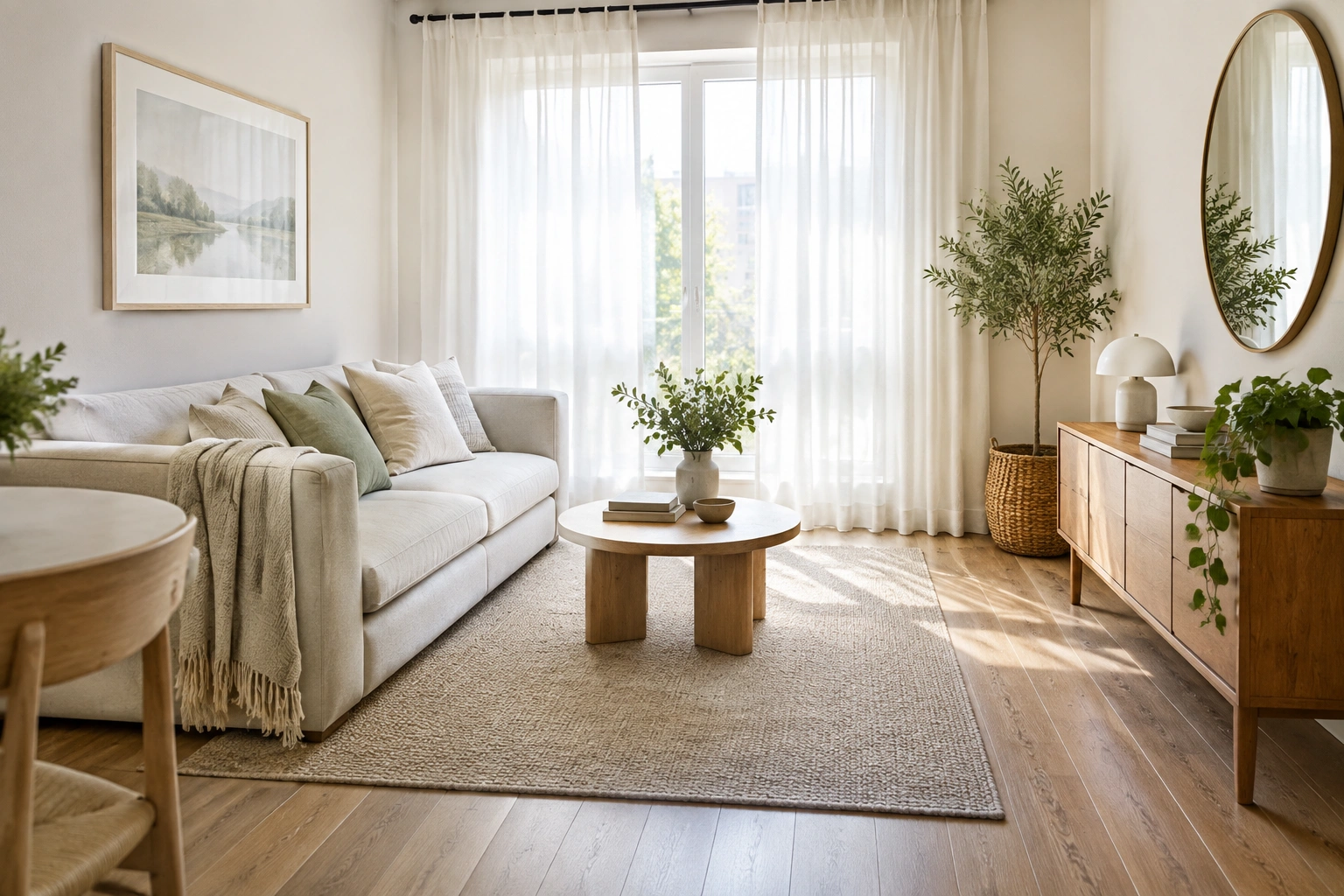
If you’re asking, “How can I make a tiny living room feel airy?” the fastest answer is this: reduce visual weight, let in more light, and make the room easier to move through.
That usually means a few high-impact changes rather than a full makeover. In most small living rooms, the biggest difference comes from four things: lighter color, better furniture scale, clearer flow, and softer window treatments. If you only do one or two updates, make them the ones that affect the most visual space first.
A good place to begin is with what you can see from the doorway. If the room reads as crowded at a glance, it will feel smaller no matter how cute the decor is. The goal is not to make it empty. It’s to make it feel breathable.
What Makes a Small Living Room Feel Heavy
A tiny room usually feels cramped when too many large surfaces compete for attention. A dark sofa, a heavy coffee table, short curtains, a rug that is too small, and a pile of small decor items can all add visual noise. Even if each piece is attractive on its own, the room can still feel busy and closed in.
The room’s actual elements matter. A bulky media console can make one wall feel heavier. A sofa pushed into every corner can make the floor plan feel jammed. A stack of framed art, candles, baskets, and knickknacks on every surface can keep the eye from resting. In a very small living room, even a few extra items on the coffee table or an overfilled bookshelf can make the space feel tighter than it is.
Light matters too. A room with one harsh ceiling fixture and shadowy corners often feels tighter than the same room with layered light sources. The eye reads brightness and open floor area as space. It reads clutter, dense color, and blocked pathways as compression.
Think of the room as a picture frame. Anything that breaks up the floor, chops the wall into pieces, or creates a lot of little distractions makes the frame feel busier. Anything that lets the eye travel smoothly makes the room feel calmer and more open.
Before You Start: What You’ll Need
You do not need a renovation budget to make progress. For a renter-friendly refresh, gather a few basics:
- A tape measure
- Painter’s tape for testing furniture placement
- A floor lamp or two if the room is dim
- Sheer or light-filtering curtains
- A mirror with secure hanging hardware or a safe lean
- A storage basket or closed bin for loose items
- A rug that fits the seating area properly
- Optional: light throw pillows, a lighter sofa cover, or a slipcover if the sofa is visually heavy
If you’re working with a tight budget, keep your money focused. In a small room, one well-chosen update often beats several small ones that don’t change the overall feel.
1. Clear the Room and Remove Visual Clutter
Before you buy anything, edit the room you already have. Small spaces get overwhelmed quickly, especially when surfaces collect mail, remotes, chargers, blankets, and decorative extras.
If space is extremely tight, start with the highest-impact removals first:
- Extra accent chairs you do not actually use
- A coffee table that blocks movement or feels oversized
- Duplicate side tables
- Decorative items crowding the TV stand, mantel, or shelves
- Baskets, boxes, or baskets of items sitting on the floor
- Anything broken, unused, or only there to “fill” space
Then sort the rest into three groups:
- Keep visible: things you use daily and can store neatly
- Hide: items you need but don’t want to see
- Remove: anything oversized, duplicate, broken, or purely filling space
Then simplify every surface. A coffee table with one tray, one book stack, and one candle usually feels calmer than a table covered in five separate objects. The same is true for shelves. A few larger pieces read more orderly than many tiny ones.
If you want the room to feel airy, give the eye room to rest. Empty space is not wasted space here. It is part of the design.
2. Choose an Airy Layout That Improves Traffic Flow
The easiest way to make a tiny living room feel more open is to protect the walking path. If you have to squeeze around furniture, the room will feel smaller no matter how pretty it is.
A useful principle is to keep the main route through the room clear and avoid placing furniture where it blocks the natural path to a doorway, window, or hallway. In very small rooms, this may mean floating a sofa slightly away from the wall instead of pushing everything flat against it. The exact gap matters less than whether circulation stays comfortable and the room does not feel jammed into the perimeter.
That small amount of breathing room works because it lets the wall read as separate from the furniture. The room feels less packed together. In a tiny room, though, don’t force extra space behind furniture if it steals valuable walk space. Use just enough separation to keep the layout from feeling shoved together.
Sectional, Loveseat, or Sofa With Chairs?
This choice matters more than most people expect.
- Sectional: best if the room shape supports it and the sectional does not block circulation. A sectional can anchor the room, but in a very small space it can dominate the floor.
- Loveseat: often the easiest choice for a tiny room because it gives seating without taking over the room visually.
- Sofa with chairs: a smart option if you want flexibility. Two lighter chairs can feel less heavy than one oversized sectional, especially if they have open legs.
If your room is narrow, a loveseat plus one chair often looks airier than a sectional. If your room is square and you need multiple seats, a compact sectional may still work, but only if the walkways stay clear.
For a deeper layout walkthrough, my guide on creating a functional layout in a tiny living room can help you map the furniture before you move anything heavy.
3. Use the Right Furniture Scale and Shape
Furniture scale is one of the biggest make-or-break decisions in a small living room. Oversized pieces crowd the room; undersized pieces can make it feel choppy and underfurnished.
Look for pieces with these traits:
- Low profile: lower backs and arms keep the sightline open
- Visible legs: furniture that shows floor underneath feels lighter
- Slim arms and frames: less visual bulk
- Rounded or narrow shapes: these often soften tight corners better than boxy forms
This is where trade-offs come in. A chunky sofa may be more comfortable for lounging, but it can visually swallow a room. A leggy sofa may look lighter, but it may not give the same sink-in feel. If comfort is non-negotiable, choose the most visually open version of the style you already like.
The same logic applies to coffee tables and side tables. A round table often moves more easily through a tight layout than a square one because it softens edges and improves flow. Glass or acrylic can also help, but only if the room is otherwise simple. Too many see-through pieces can feel fussy instead of airy.
4. Lighten the Room With Color and Textiles
Color affects how heavy a room feels the second you walk in. If repainting is possible, a light wall color is one of the most effective ways to make a tiny living room feel brighter and more open.
If you can paint, choose a soft, light tone rather than a stark white that feels harsh in your light. Warm whites, pale greiges, soft beige, and muted off-whites usually feel calmer than high-contrast colors in a tiny living room.
If you can’t paint, work with what you already have. Keep the existing wall color if it is already fairly light or neutral, and use textiles to do the heavy lifting. That usually means a lighter rug, softer curtain panels, and pillows or throws that reduce contrast around the sofa.
The easiest textile swaps:
- A lighter rug
- Pillow covers in soft neutrals
- A throw blanket in a tone close to the sofa
- Curtains that are lighter than the wall color or close to it
A dark sofa can still work in a small room, but it helps to balance it with a lighter rug or lighter pillows so the room does not feel top-heavy. If your sofa is already light, keep the rest of the room from getting too busy with strong patterns.
The goal is not to eliminate personality. It’s to reduce contrast where contrast makes the room feel smaller.
5. Maximize Natural Light With Curtains and Mirror Placement
Windows are your best friend in a tiny living room, so avoid covering them in a way that shrinks them visually. Heavy curtains hung low and narrow make windows feel smaller. Sheer or light-filtering panels let daylight do more of the work.
Hang curtains high and wide if you can. That means placing the rod closer to the ceiling and extending it past the window frame. This trick makes the window look larger and keeps more glass visible when the panels are open.
If privacy is a concern, layer a sheer panel with a more opaque curtain. That gives you flexibility without giving up daylight during the day.
Mirrors can help too, but placement matters more than size. Put a mirror where it can reflect natural light, not just where it fills an empty wall. The best spot is often opposite or angled toward a window. That way, it can bounce brightness deeper into the room.
A mirror is most useful when it reflects something attractive: daylight, greenery, or a clean part of the room. If it reflects clutter, it will only multiply the problem.
6. Layer Lighting for a Brighter, More Open Feel
A tiny room feels flatter when all the light comes from one overhead source. That single source often creates shadows in corners and makes the room feel more closed in at night.
Instead, use layers:
- Ambient light: the general light that fills the room
- Task light: a lamp for reading or working
- Accent light: a small light that highlights a corner, shelf, or plant
For a low-cost upgrade, aim for warm white bulbs in the soft-to-neutral range rather than very cool, blue-leaning light. Place a floor lamp beside the sofa, a table lamp near a reading chair, or a small lamp on a console so the light reaches dark corners instead of staying centered overhead.
The room does not need to be bright in a harsh way. It needs to be evenly lit so corners do not disappear into shadow.
If you rent, floor lamps are especially useful because they add brightness without drilling. Just keep cords tucked safely out of walkways.
7. Use Storage That Hides Clutter Instead of Displaying It
Open storage can look airy when it is styled carefully, but it can also become visual chaos fast. If your main issue is clutter, closed storage usually wins.
Use storage that lets the room stay calm at a glance:
- A low media cabinet with doors
- A storage ottoman
- Baskets that fit under a console or side table
- A slim cabinet that hides remotes, chargers, and small electronics
- A small credenza or sideboard with closed doors
For renters and small spaces, these pieces are especially useful because they hide everyday items without needing built-ins. A closed storage bench, a lidded basket, or a narrow cabinet can hold blankets, games, cords, and extra pillows while still keeping the room visually quiet.
Open shelving is best when you are disciplined about what goes on it. If every shelf becomes a catchall, it will make the room feel busier, not lighter. Closed storage is more forgiving for everyday life.
This is one of the clearest trade-offs in small-space decorating: open storage can feel visually lighter, but closed storage usually makes the room feel more peaceful. If your living room is already full, choose hidden storage first.
8. Renter-Friendly No-Paint, No-Drill Upgrades: Do These First
If you rent, or if you simply want the fastest changes with the least commitment, start here:
- Declutter the floor and surfaces
- Swap in lighter curtains and hang them higher if the rod already allows it
- Add one or two lamps to brighten dark corners
- Use a lighter rug, throw, or pillow covers to soften heavy furniture
- Add a mirror that can lean safely or hang with approved hardware
This order works because it focuses first on what changes the room’s scale and brightness without asking for paint or tools. In a tiny living room, those changes usually make a bigger difference than decorative extras.
Quick Comparison: Which Choices Make a Room Feel Airier?
| Choice | Airier Option | Heavier Option | Best For |
|---|---|---|---|
| Wall color | Light neutral | Dark, saturated color | Brightening a dim room |
| Sofa style | Low-profile, leggy | Boxy, bulky | Opening the sightline |
| Seating plan | Loveseat or sofa + chairs | Oversized sectional | Tight rooms with limited circulation |
| Curtains | Sheer, hung high and wide | Short, heavy, low-hung | Maximizing daylight |
| Storage | Closed cabinets and baskets | Open shelves full of items | Hiding everyday clutter |
| Rug | Large enough to anchor seating | Too small and floating | Making the room feel unified |
Common Mistakes That Make a Tiny Living Room Feel Heavier
A few choices tend to undo an airy look quickly:
- Too many small decor items: they create visual static
- A rug that is too small: it chops up the floor
- Curtains that stop at the window frame: they make the opening feel shorter
- Bulky furniture pushed everywhere: this can make the room feel more crowded, not less
- One bright ceiling light only: it leaves harsh shadows
- Open shelves filled edge to edge: they become visual clutter instead of storage
If the room still feels off after a refresh, check these first. Often the problem is not the color palette. It’s the scale or placement of the larger pieces.
Troubleshooting: If Your Room Still Feels Cramped, What to Change Next
If the room feels heavy after the basics, use this decision guide:
If the room is dark
Add another light source before buying more decor. Light fixes usually have a bigger effect than accessories.
If the room feels crowded
Remove one piece of furniture if possible. In a tiny room, one less chair or side table can make a noticeable difference.
If the sofa dominates the room
Swap to a lighter-looking sofa cover, add a lighter rug, or replace the coffee table with a smaller round one.
If the windows feel small
Raise the curtain rod and widen the curtain span. This is one of the simplest ways to make the room feel less boxed in.
If the room feels busy even when tidy
Reduce the number of decor objects on surfaces. Use fewer, larger pieces instead of many small ones.
Practical Examples of Airy Small-Living-Room Makeovers
A renter with a dark sofa, heavy curtains, and a small square coffee table could make the room feel lighter by swapping in sheer panels, moving to a round table, and adding a floor lamp near the sofa. None of those changes requires paint or drilling, but together they change the room’s tone.
Another tiny living room might already have good natural light but still feel cramped because of cluttered shelving. Replacing an open shelf full of mixed items with a low closed cabinet can make the room feel calmer almost immediately.
A third example: a narrow room with a loveseat floating slightly off the wall, a larger rug, and a mirror across from the window often feels more open than the same room with every piece pushed against the perimeter. That small bit of spacing helps the room read as intentional instead of jammed together.
A Simple Checklist for an Airy Tiny Living Room
Use this as your quick reset:
- Remove anything you do not use or love
- Keep pathways clear
- Choose low-profile, leggy furniture when possible
- Use light colors on large surfaces
- Hang curtains high and wide
- Let natural light stay visible during the day
- Add layered lighting for evenings
- Pick a rug large enough to unify the seating area
- Hide clutter in closed storage
- Keep decor simple and intentional

If you only do three things, I’d choose these: lighten the window treatment, improve the lighting, and edit the furniture scale. Those three changes usually do the most work in the least amount of space.
For more help making the room feel visually balanced, you may also like my guide on how to make a small living room feel balanced without making it feel crowded. And if you’re still deciding whether a sectional is the right fit, my post on whether a sectional can fit in a 10×10 living room breaks down the trade-offs in a very practical way.
FAQ
What is the fastest way to make a tiny living room feel airy?
Start by clearing visual clutter, improving the lighting, and switching to lighter curtains or textiles. Those changes usually make the room feel more open right away.
Should I repaint a small living room to make it feel bigger?
If painting is an option, a light wall color can help a lot. If you can’t paint, keep the existing wall color and rely on lighter rugs, curtains, and pillows instead.
What should I remove first in a very small living room?
Remove anything oversized, duplicate, broken, or blocking circulation first. Extra chairs, bulky tables, and surface clutter usually have the biggest impact.
Do I need all new furniture for a tiny living room?
No. Often you can keep your current furniture and make the room feel lighter with better placement, a more open layout, and a few textile or lighting swaps.
What kind of storage works best in a small living room?
Closed storage usually works best because it hides everyday clutter. Look for low cabinets, storage ottomans, baskets, or slim sideboards with doors.